
About NEO
Neo is a public, open-source blockchain platform designed to support a smart economy through smart contracts, decentralized applications, and programmable asset management. Da Hongfei and Erik Zhang created the project, originally called Antshares, in 2014. The source code was published in 2015, and the mainnet launched in 2016. Neo uses a delegated Byzantine Fault Tolerance consensus mechanism. NEO token holders vote to elect consensus and governance nodes, which handle block production and network parameters. The platform has a dual-token model. NEO is the governance and ownership token. GAS is the utility token used to pay for transactions and smart contract execution. NEO holders earn GAS distributions over time simply by holding NEO, but GAS, not NEO, is what gets spent when running applications on the network. NEO has a fixed total supply of 100 million tokens, all pre-minted and indivisible, with roughly 70.5 million in circulation. GAS is emitted per block up to a planned total of 100 million over approximately 22 years. In practice, Neo is infrastructure for digitized assets and decentralized applications. NEO functions as a governance and investment asset, while GAS is the metered resource for network usage.
Gartner warns AI boom faces a $4.9 trillion revenue gap by 2030
AI infrastructure investments risk massive write-downs, potentially reshaping the market landscape and driving consolidation by 2030.

CoreWeave shares drop 30% in October amid investor concerns over debt strategy
CoreWeave's share drop highlights broader investor skepticism towards debt-heavy growth strategies in the neocloud sector, risking instability.

General Compute taps Positron AI to split inference work between GPUs and memory-first chips
The partnership could redefine AI infrastructure by optimizing resource allocation, potentially challenging GPU-dominant models and enhancing efficiency.

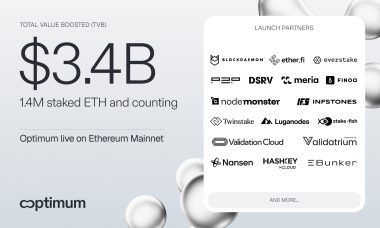
Optimum launches on Ethereum mainnet, reaching $3.4B in total value boosted across leading validators
Boston, US, 20th October 2026, Chainwire
Tokenized stocks need abstraction layers to trade as easily as traditional shares, Enso CEO says
Abstraction layers in tokenized stock trading could streamline user experience, enhance DeFi integration, and boost institutional trust.

Sophon sets November 25 deadline for asset withdrawals before mainnet shutdown
Sophon’s shutdown highlights the financial challenges of standalone blockchains, pushing projects to leverage established networks for sustainability.

A sourced map of NEO's relationships is on the way.
Partners, competitors and related assets, each link independently verified and source-linked before it appears here.
The Crypto Briefing podcast is on the way.
Conversations on NEO and the wider market, hosted by our team, will appear here once episodes are live.