
https://en.wikipedia.org/wiki/Strait_of_Hormuz
Oman’s proposal for joint management of Strait of Hormuz clashes with iran’s control ambitions
US charges Hormuz fees
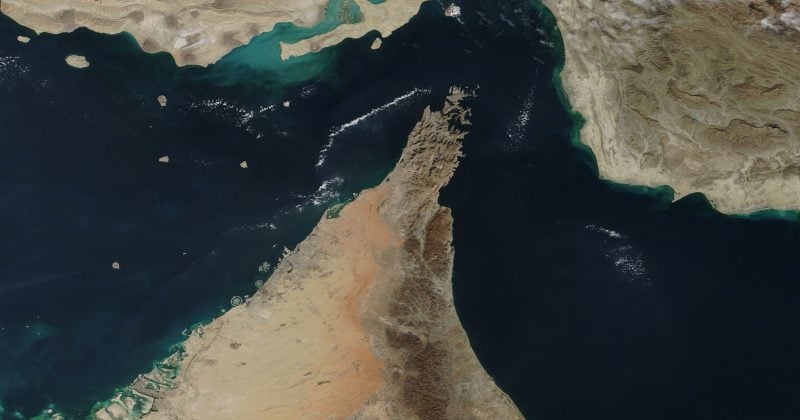
Oman’s recent proposal for a collaborative regional mechanism to manage the Strait of Hormuz has brought it into contention with Iran, which seeks to maintain its control over the strategic waterway and impose passage fees. The Strait of Hormuz is a critical maritime chokepoint between Oman and Iran, and its governance has been a point of diplomatic discussion between the two nations. Iran has already taken measures to solidify its control over the strait, setting up systems to regulate ship passage and collect fees, thus asserting its authority. Oman’s proposed model draws inspiration from the Strait of Malacca, where voluntary contributions are made for navigation and environmental services, but Iran’s stance complicates this vision.
Key Takeaways
- Oman’s proposal appears to be at odds with Iran’s established control over the Strait of Hormuz, suggesting continued Iranian fee imposition.
- Market pricing suggests this conflict may decrease the likelihood of the U.S. imposing its own passage fees through the strait.
- The situation reflects broader geopolitical tensions in the region, with significant implications for maritime governance.
What to Watch
Key actors such as U.S. President Donald Trump and Secretary of State Marco Rubio may influence future developments through policy announcements or diplomatic actions. Watch for any shifts in U.S. policy regarding the imposition of fees or tolls on the Strait of Hormuz, as well as Iran’s continuing efforts to assert its control. The evolution of diplomatic talks between Oman and Iran could also impact market dynamics and influence the likelihood of fee implementation in the region.
Get live prediction-market analysis, powered by Vera. Sign up for Vera.