The OpenAI CEO called self-replicating data centers "within grasp" as the company expands its robotics labs and plans a humanoid demo for 2027
OpenAI wants robots to build the buildings that house its AI. Then, eventually, it wants those buildings to help make more of themselves.
On the Sources podcast, CEO Sam Altman laid out how the company’s robotics program fits into its infrastructure ambitions. He described self-replicating data centers as “within grasp.”
What Altman actually described
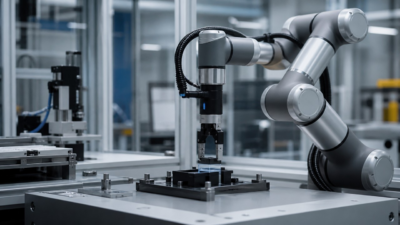
OpenAI is developing AI-controlled robots that can build data centers and the components that go inside them.
Altman also confirmed that OpenAI is developing a humanoid robot. A demo is expected in 2027.
He was careful to frame the body as secondary. In his telling, the intelligence supplied by OpenAI’s models, which he called the “brain,” matters more than the physical shape of the machine.
The program is also aimed at a specific kind of work. The push is oriented toward supporting skilled labor rather than building gadgets for consumers.
How fast the robotics effort has grown
OpenAI revived its robotics initiatives in 2025. Its San Francisco robotics lab has been operating since February 2025. The lab has quadrupled in size and employs around 100 data collectors.
A second robotics lab is planned for Richmond, California, as part of the company’s ongoing expansion.
OpenAI has dozens of robotics-related job openings, with roles focused on actuators, sensors and controls.
The bigger infrastructure picture
The robotics push sits alongside OpenAI’s significant investment in the Stargate project, its large-scale effort to expand AI computing capacity.
In November 2025, OpenAI also partnered with Foxconn to co-design and manufacture AI data center hardware at facilities in the US.
What this means
Execution risk is real. Humanoid robotics has a long history of impressive demos and slower real-world deployment. A 2027 demo is a milestone, not proof of a production-ready system working on a live construction site.
“Self-replicating” is also doing a lot of work as a phrase. Altman said the goal is “within grasp,” which is a statement of ambition rather than a delivered capability.
The key markers ahead are straightforward. Watch the opening of the Richmond lab, the pace of robotics hiring and output from the Foxconn hardware partnership. Then comes the humanoid demo itself, where OpenAI will have to show that its “brain first” thesis holds up once the brain has to operate a body.