Qualcomm and Micron stocks fluctuate amid AI trade volatility as semiconductor sector swings wildly
A $400 billion after-hours rally followed a bruising sell-off weeks earlier, capturing the bipolar mood of AI chip investors in one earnings cycle
QUALCOMM Incorporated (QCOM) price
Full chart and statsLoading chart…
- Last close
- $184
- Close-to-close change
- +2.5%
- Market cap
- $193.4B (shares as of 2026-07-27)
- P/E (trailing)
- 21.0 (EPS to 2026-06-28)
- Annual revenue
- $44.3B USD (FY ended 2025-09-28) 10-K
- Annual revenue growth
- +13.7% (FY ended 2025-09-28 vs FY ended 2024-09-29) 10-K
- Annual net income
- 5,541,000,000 USD (FY ended 2025-09-28, attributable to the company) 10-K
- Annual operating margin
- 27.9% (FY ended 2025-09-28)
- Forward P/E
- Unavailable: no dated forecast source
Gloria daily close for session Oct 27, 2026. Market cap and trailing P/E use this close with the SEC share total and trailing diluted earnings, each dated next to its figure. Annual revenue, revenue growth, net income and margin show their own fiscal period and link the 10-K. Current context may postdate this article.
QUALCOMM Incorporated and its peers
| Company | Price | Market cap | P/E (trailing) | Forward P/E | Annual revenue (USD) | Annual revenue growth | Annual net income (USD) | Operating margin |
|---|---|---|---|---|---|---|---|---|
|
|
$184 | $193.4B | 21.0 | Unavailable | $44.3BFY ended 2025-09-28 · 10-K | +13.7%FY ended 2025-09-28 vs 2024-09-29 · 10-K | 5,541,000,000FY ended 2025-09-28, attributable to the company · 10-K | 27.9%FY ended 2025-09-28 |
|
|
$866 | $77.7B | Not meaningfulLoss, diluted EPS −92.96 to 2026-06-27 · SEC filing | Unavailable | $3.0BFY ended 2026-06-27 · 10-K | +83.2%FY ended 2026-06-27 vs 2025-06-28 · 10-K | −6,935,100,000FY ended 2026-06-27, attributable to the company · 10-K | 17.4%FY ended 2026-06-27 |
|
|
$425 | $206.1B | 50.5 | Unavailable | $11.0BFY ended 2025-11-01 · 10-K | +16.9%FY ended 2025-11-01 vs 2024-11-02 · 10-K | 2,267,342,000FY ended 2025-11-01, attributable to the company · 10-K | 26.6%FY ended 2025-11-01 |
|
|
$895 | $238.4B | 25.7 | Unavailable | $38.1BFY ended 2025-12-31 · 10-K | +9.0%FY ended 2025-12-31 vs 2024-12-31 · 10-K | 4,884,000,000FY ended 2025-12-31, attributable to the company · 10-K | 3.6%FY ended 2025-12-31 |

Missing figures stay unavailable. Forward P/E requires a dated source. Annual revenue, revenue growth, net income and margin come from each company's own 10-K, in US dollars, and each row shows that fiscal year. Revenue growth compares the fiscal year with the prior year stated in the same 10-K. Net income is the full year amount attributable to the company, or available to common stockholders where the filing states only that, or consolidated net income. Each row names its basis. Trailing P/E reads "Not meaningful" when the dated trailing diluted EPS is a loss or zero. An operating margin appears only when the filing states both the operating income and the revenue for the same year.
Sources: SEC filings and Gloria daily closes. Oldest record refresh: Oct 27, 2026, 7:36 PM EDT. Refresh is not a price or filing date. Each row shows its price date and its annual fiscal period. Peers use industry code and company size, or editorial selection. Market cap multiplies that row price by the company share total the latest SEC filing states for every share class together. Trailing P/E divides it by trailing diluted earnings from SEC filings. Rolled earnings per share are approximate because share counts can change between periods. Both appear only when the SEC data carries its date, so they are estimates at one price date, not synchronized filing valuations. Not investment advice.
The semiconductor sector just lived through a mood swing that would make a therapist reach for their notepad. In the span of three weeks, chip stocks went from a punishing sell-off to a euphoric rally that added over $400 billion in market value during after-hours trading. The catalysts: Micron Technology and Qualcomm, whose late-June earnings reports reminded Wall Street that the AI trade is very much alive, even if it occasionally gives investors heart palpitations.
Micron’s fiscal Q3 results were the kind of numbers that make analysts spill their coffee. Revenue surged 346% year-over-year and 74% sequentially, sending shares up roughly 15-17% in extended trading. Qualcomm, not to be outdone, dropped a long-term forecast that projected $15 billion in data-center revenue by fiscal 2029, while raising its overall non-handset revenue target to $40 billion by the same year.
From sell-off to surge in three weeks
On June 4, 2026, the sector got hammered. Micron dropped more than 7%. Qualcomm fell approximately 2%. The culprit was a growing concern that AI valuations had gotten ahead of themselves.
The after-hours reaction was dramatic. The chip sector collectively added over $400 billion in market value in a single trading session after the closing bell.
The AI trade is broadening, and that matters
Micron’s blowout results signal that memory chips are becoming a critical bottleneck and profit center in AI infrastructure. Analysts have recognized a widening demand for AI technologies beyond GPUs and a strengthened pricing capacity in memory products.
AI, tech, and the markets they move—in one daily briefing.
Daily. Free. Join 34,000+ readers across crypto, finance, and policy.
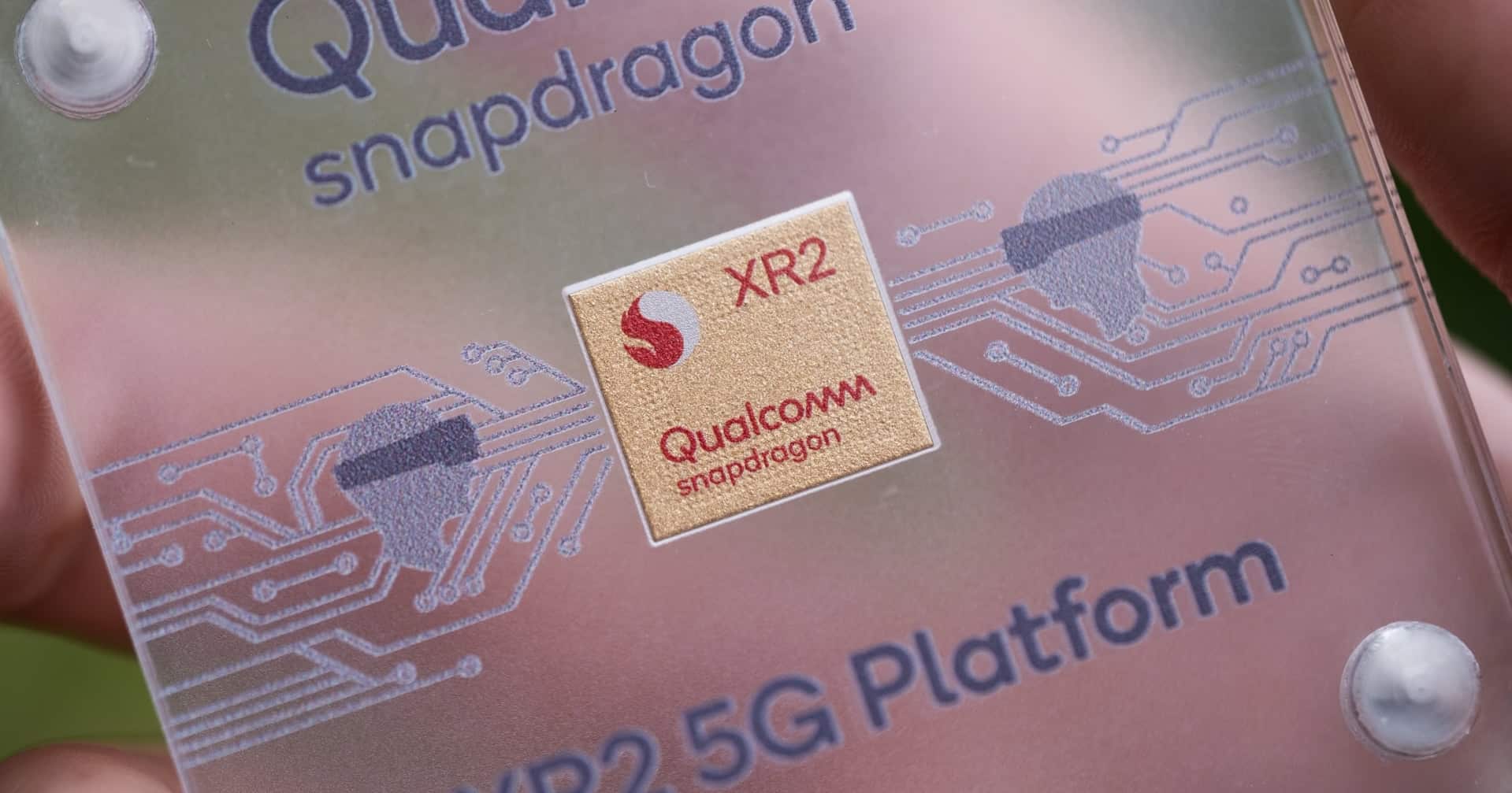
Qualcomm’s $15 billion data-center revenue target by 2029 represents a significant pivot for a company historically known for smartphone modems. The two companies are also partnered to supply LPDDR5X memory for Qualcomm’s Snapdragon platforms, specifically designed to enhance edge AI capabilities. Qualcomm raising its non-handset revenue target to $40 billion by fiscal 2029 signals the company is no longer positioning itself primarily as a phone chip company.
What this means for investors
Micron losing more than 7% in a single session on June 4, only to gain 15-17% a few weeks later after reporting 346% year-over-year revenue growth, reflects a market that is willing to lurch in either direction on new information.
If Qualcomm successfully executes its data-center and edge AI strategy, a $40 billion non-handset revenue target by 2029 would fundamentally reshape how the market values the stock.
The Micron-Qualcomm partnership on LPDDR5X memory for Snapdragon platforms hints at a vertical integration trend in AI hardware. Companies that control both the processing and memory layers of AI workloads may have pricing advantages that pure-play chipmakers can’t match.
Investors should watch quarterly capex guidance from major cloud providers as a leading indicator of whether AI infrastructure spending continues, given that the current wave of AI infrastructure investment is one of the largest in history.
Disclosure: This article was edited by Editorial Team. For more information on how we create and review content, see our Editorial Policy.

