The London startup behind the Sonic Inference Pod is aiming for a production-line factory that could mass-produce its modular data centers by 2028
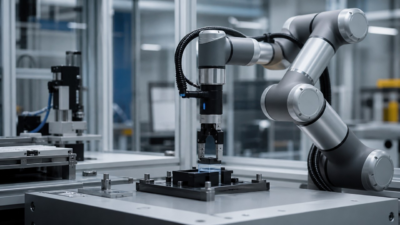
Runware, a London-based AI infrastructure startup, wants to stop building data centers and start manufacturing them. The company told TechCrunch it plans to set up a factory where its modular data centers roll down an assembly line, much like cars do.
The target for mass production is 2028. If it works, the slow, bespoke process of standing up AI compute starts looking a lot more like Henry Ford and a lot less like a cathedral construction project.
What exactly would the factory build
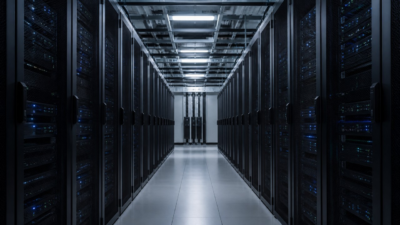
The Sonic Inference Pod is a self-contained data center that fits inside a 20-foot shipping container. It is assembled in a factory and shipped to customers ready to plug in.
Each pod carries roughly 1 MW of IT load and can hold up to 1,200 GPUs. That is serious density for something that could ride on the back of a truck.
Cooling is handled by a proprietary closed-loop liquid system that uses no water. That matters because water consumption has become one of the more awkward talking points for data center operators looking for new sites.
Speed is the main selling point. Average deployment runs about three weeks, and at sites that already have power in place, a pod can be running within days.
The pods are built for inference, the part of AI where trained models actually answer questions, generate images or process requests. Training a model is like writing the textbook. Inference is every student reading it, millions of times a day.
The numbers behind the pitch
Runware currently has 10 pods in operation across the US, Europe and Asia-Pacific. Customers include Higgsfield AI and website builder Wix.
The company claims its operating costs come in 30–80% lower per GPU-hour than competing providers. It attributes that edge to vertical integration, meaning it controls the stack from hardware to software rather than renting pieces from others.
On the software side, Runware offers access to more than 400,000 models through what it calls a unified “Model Lake.” Think of it as a single storefront where developers can pick a model and run it on Runware’s hardware.
Funding has kept pace with the ambitions. Runware closed a $50 million Series A in December 2025, bringing total funding to $66 million. Backers include Dawn Capital and Comcast Ventures.
The expansion goals are aggressive. Runware is targeting deployment of up to 10,000 pods across the US and Europe in the second half of 2026, and more than 1 GW of inference capacity in 2027.
Those two targets are worth reading side by side. At roughly 1 MW per pod, 10,000 pods would imply far more than 1 GW, so the words “up to” are doing a lot of heavy lifting in that first goal.
Why a car factory model makes sense, in theory
The logic behind the production line is simple. Every pod is the same size and shape, and every unit uses the same core design.
Standardized products are exactly what assembly lines were invented for. Once the process is tuned, each additional unit should get faster and cheaper to build.
Runware is effectively betting that the bottleneck in AI infrastructure is construction time. If the hardware can show up ready to run, the only remaining question is whether the site has power.
That question is not a small one. A pod can be online in days only at sites that are already power-ready, and securing grid capacity has become a challenge across the industry.
What this means for the AI infrastructure race
For Runware, the factory is the step that turns a clever product into a scalable business. Ten pods in the field is a proof of concept. Thousands requires a manufacturing operation that does not yet exist.
The risks are real. Building a factory is capital intensive, and $66 million in total funding is modest against the scale of the plans described.
Execution is the other variable. Moving from 10 deployed units to the 2026 and 2027 targets, and then to mass production by 2028, requires hitting several milestones in quick succession.
The cost claims will also face scrutiny as more customers come aboard. A 30–80% discount per GPU-hour is a headline-grabbing number, and buyers will want to see where in that range their own bills land.
What to watch next: whether Runware names a factory location, how quickly it adds pods beyond the current 10, and whether more brand-name customers follow Higgsfield AI and Wix.