
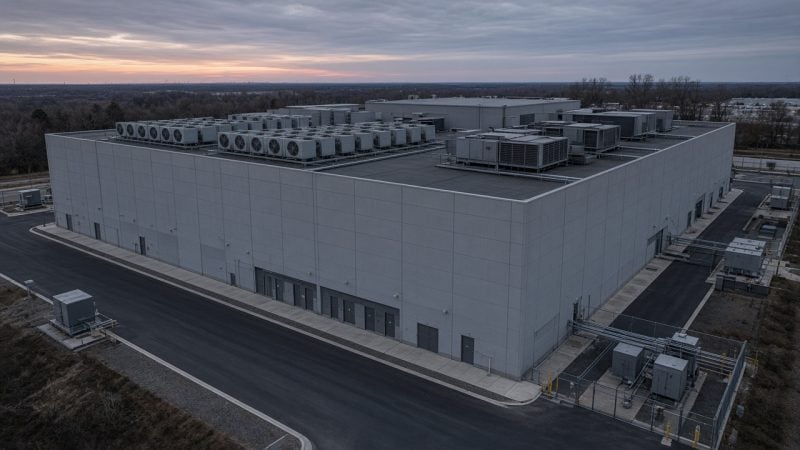
San Francisco hits pause on new data centers with 45-day moratorium

San Francisco hits pause on new data centers with 45-day moratorium

City supervisors unanimously froze new data center approvals while planners study energy, water, noise, and pollution impacts

San Francisco has put new data centers on hold. The city’s Board of Supervisors unanimously approved a 45-day interim moratorium on October 6-7, 2026, halting new approvals and expansions while officials figure out what these facilities are doing to the neighborhoods around them.

The measure is an interim zoning moratorium, and it took effect immediately. Supervisor Shamann Walton introduced it, with backing from Supervisors Connie Chan, Jackie Fielder, and Chyanne Chen.

For 45 days, the city will not sign off on new data centers or expansions of existing ones. Facilities already running keep running, but nobody gets to build or grow.

The pause has a homework assignment attached. The Planning Department must report its findings within 25 days of the moratorium taking effect.

Advertisement

That report will shape what happens next. The study could lay the groundwork for a potential long-term ban, though nothing in the current measure makes that outcome automatic.

The issue hits close to home for Walton. At least two data centers already operate in his Bayview district, and expansions have been proposed there.

A zoning rulebook from the flip-phone era

San Francisco’s Planning Code defines data centers using language written in 2001, and that definition does not account for what modern facilities require.

Federal projections suggest data center electricity demand could triple by 2028. A zoning code written a quarter century ago was never designed to weigh that kind of load against a residential block.

The supervisors’ concerns cover a familiar list: energy use, water consumption, noise, and pollution. The worry is sharpest for neighborhoods already carrying a heavy environmental burden, where one more industrial-scale neighbor could tip the balance.

San Francisco is not alone

Other California cities have already been down this road. Monterey Park moved to a permanent ban on data centers in May 2026, a reminder that temporary pauses can harden into something more lasting.

Closer to San Francisco, Oakland and Hayward have proposed similar moratoriums or reviews of their own.

What this means for AI infrastructure

The key dates to watch are close. The Planning Department’s report is due within 25 days, and the moratorium itself runs 45 days. What the planners recommend will indicate whether San Francisco intends to update its rulebook and reopen for business or follow Monterey Park toward a permanent ban.

If Oakland and Hayward’s proposals advance, the Bay Area could end up with a patchwork of data center rules that developers will have to navigate city by city.

Disclosure: This article was edited by Diego Almada Lopez. For more information on how we create and review content, see our Editorial Policy.
San Francisco hits pause on new data centers with 45-day moratorium

City supervisors unanimously froze new data center approvals while planners study energy, water, noise, and pollution impacts

San Francisco has put new data centers on hold. The city’s Board of Supervisors unanimously approved a 45-day interim moratorium on October 6-7, 2026, halting new approvals and expansions while officials figure out what these facilities are doing to the neighborhoods around them.

The measure is an interim zoning moratorium, and it took effect immediately. Supervisor Shamann Walton introduced it, with backing from Supervisors Connie Chan, Jackie Fielder, and Chyanne Chen.

For 45 days, the city will not sign off on new data centers or expansions of existing ones. Facilities already running keep running, but nobody gets to build or grow.

The pause has a homework assignment attached. The Planning Department must report its findings within 25 days of the moratorium taking effect.

Advertisement

That report will shape what happens next. The study could lay the groundwork for a potential long-term ban, though nothing in the current measure makes that outcome automatic.

The issue hits close to home for Walton. At least two data centers already operate in his Bayview district, and expansions have been proposed there.

A zoning rulebook from the flip-phone era

San Francisco’s Planning Code defines data centers using language written in 2001, and that definition does not account for what modern facilities require.

Federal projections suggest data center electricity demand could triple by 2028. A zoning code written a quarter century ago was never designed to weigh that kind of load against a residential block.

The supervisors’ concerns cover a familiar list: energy use, water consumption, noise, and pollution. The worry is sharpest for neighborhoods already carrying a heavy environmental burden, where one more industrial-scale neighbor could tip the balance.

San Francisco is not alone

Other California cities have already been down this road. Monterey Park moved to a permanent ban on data centers in May 2026, a reminder that temporary pauses can harden into something more lasting.

Closer to San Francisco, Oakland and Hayward have proposed similar moratoriums or reviews of their own.

What this means for AI infrastructure

The key dates to watch are close. The Planning Department’s report is due within 25 days, and the moratorium itself runs 45 days. What the planners recommend will indicate whether San Francisco intends to update its rulebook and reopen for business or follow Monterey Park toward a permanent ban.

If Oakland and Hayward’s proposals advance, the Bay Area could end up with a patchwork of data center rules that developers will have to navigate city by city.

Disclosure: This article was edited by Diego Almada Lopez. For more information on how we create and review content, see our Editorial Policy.