
Supermicro advances gigawatt-scale AI data center with SpaceXAI

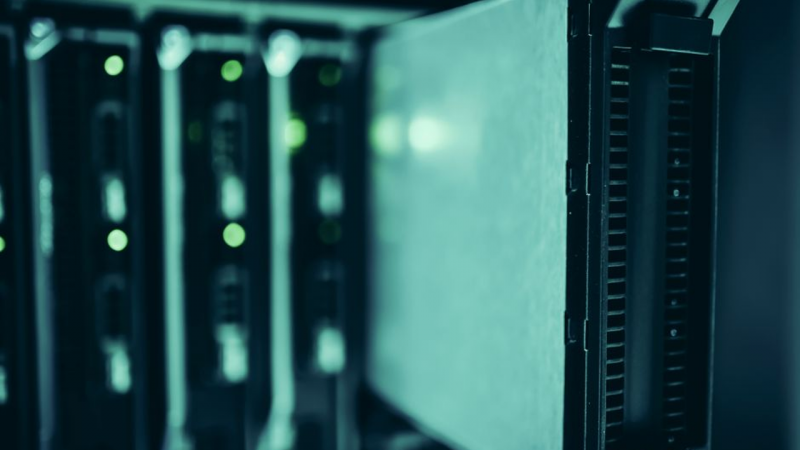
Photo: panumas nikhomkhai / Pexels

Supermicro advances gigawatt-scale AI data center with SpaceXAI

The server maker's partnership with Elon Musk's merged AI entity is reshaping the economics of hyperscale computing infrastructure

Supermicro is building what could become one of the largest AI data centers on the planet, partnering with SpaceXAI and leaning heavily on Nvidia’s latest GPU systems to do it. The project targets gigawatt-scale capacity, a threshold that puts it in a class of facility most power grids weren’t designed to accommodate.

Supermicro CEO Charles Liang has said this will be the company’s fastest time-to-operation project yet, outpacing even the Memphis Colossus clusters that previously stood as the benchmark.

How SpaceXAI came to be

SpaceXAI is the entity born from SpaceX’s acquisition of xAI back in February 2026. The merger folded Elon Musk’s standalone AI venture into his rocket company, creating a hybrid organization with ambitions spanning both terrestrial compute and, eventually, space-based AI applications.

Advertisement

SpaceXAI’s roadmap calls for more than 2 GW of computational power by the end of 2026, with a target of nearly 10 GW by late 2027. Supermicro’s role in all of this is essentially the hardware backbone. The company’s Data Center Building Block Solutions, known as DCBBS, provide modular infrastructure that can be deployed and scaled quickly. Paired with its direct liquid cooling technology, designated DLC-2, these systems allow dense GPU racks to operate without overheating.

The numbers behind the partnership

Supermicro’s fiscal Q4 2026 results tell the financial story clearly. The company reported more than $60 billion in new quarterly orders, a figure that reflects the sheer volume of hardware SpaceXAI and similar hyperscale clients are consuming.

That demand pushed Supermicro to raise its gross margin guidance to between 15% and 17%. By September 2026, Supermicro began shipping Nvidia Vera Rubin NVL72 rack-scale systems specifically built for SpaceXAI deployments. These shipments support installations ranging from 5 megawatts up to full gigawatt capacity, essentially allowing SpaceXAI to scale incrementally while building toward its larger targets.

The Vera Rubin NVL72 represents Nvidia’s next-generation rack-level GPU system, designed for the kind of dense AI workloads that train large language models like Grok. Each rack integrates 72 GPUs into a single liquid-cooled unit, eliminating much of the interconnect latency that slows down distributed training across separate machines.

SpaceXAI has signaled interest in satellite-based AI systems, which would place optimized computing hardware in orbit.

Disclosure: This article was edited by Diego Almada Lopez. For more information on how we create and review content, see our Editorial Policy.
Supermicro advances gigawatt-scale AI data center with SpaceXAI

The server maker's partnership with Elon Musk's merged AI entity is reshaping the economics of hyperscale computing infrastructure

Photo: panumas nikhomkhai / Pexels

Supermicro is building what could become one of the largest AI data centers on the planet, partnering with SpaceXAI and leaning heavily on Nvidia’s latest GPU systems to do it. The project targets gigawatt-scale capacity, a threshold that puts it in a class of facility most power grids weren’t designed to accommodate.

Supermicro CEO Charles Liang has said this will be the company’s fastest time-to-operation project yet, outpacing even the Memphis Colossus clusters that previously stood as the benchmark.

How SpaceXAI came to be

SpaceXAI is the entity born from SpaceX’s acquisition of xAI back in February 2026. The merger folded Elon Musk’s standalone AI venture into his rocket company, creating a hybrid organization with ambitions spanning both terrestrial compute and, eventually, space-based AI applications.

Advertisement

SpaceXAI’s roadmap calls for more than 2 GW of computational power by the end of 2026, with a target of nearly 10 GW by late 2027. Supermicro’s role in all of this is essentially the hardware backbone. The company’s Data Center Building Block Solutions, known as DCBBS, provide modular infrastructure that can be deployed and scaled quickly. Paired with its direct liquid cooling technology, designated DLC-2, these systems allow dense GPU racks to operate without overheating.

The numbers behind the partnership

Supermicro’s fiscal Q4 2026 results tell the financial story clearly. The company reported more than $60 billion in new quarterly orders, a figure that reflects the sheer volume of hardware SpaceXAI and similar hyperscale clients are consuming.

That demand pushed Supermicro to raise its gross margin guidance to between 15% and 17%. By September 2026, Supermicro began shipping Nvidia Vera Rubin NVL72 rack-scale systems specifically built for SpaceXAI deployments. These shipments support installations ranging from 5 megawatts up to full gigawatt capacity, essentially allowing SpaceXAI to scale incrementally while building toward its larger targets.

The Vera Rubin NVL72 represents Nvidia’s next-generation rack-level GPU system, designed for the kind of dense AI workloads that train large language models like Grok. Each rack integrates 72 GPUs into a single liquid-cooled unit, eliminating much of the interconnect latency that slows down distributed training across separate machines.

SpaceXAI has signaled interest in satellite-based AI systems, which would place optimized computing hardware in orbit.

Disclosure: This article was edited by Diego Almada Lopez. For more information on how we create and review content, see our Editorial Policy.