
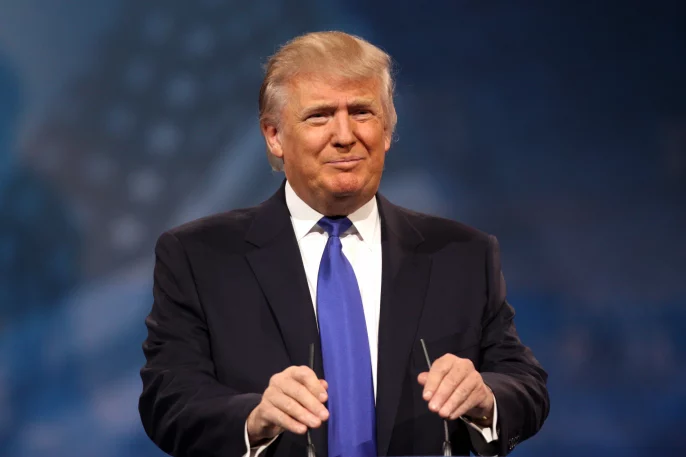
Trump proposes AI self-regulation accord with tech executives

Gage Skidmore from Peoria, AZ, United States of America

Trump proposes AI self-regulation accord with tech executives

The voluntary agreement calls for internal controls, outside evaluations and board oversight as concerns grow over autonomous AI systems.

OpenAI, Anthropic, Google, Meta, xAI and Nvidia have signed a voluntary AI safety accord with the Trump administration, committing to stronger internal controls and independent reviews of their most advanced systems.

The agreement was reached Tuesday following a White House meeting between President Donald Trump and executives from leading AI companies, according to a Financial Times report. Trump described the accord as ā€œmorally bindingā€ and said it was intended to provide a framework for companies to police the risks posed by increasingly capable AI systems. Reuters separately reported that the agreement is voluntary rather than legally binding.

Under the accord, participating companies are expected to work with external auditors or evaluators to test whether their AI safety controls operate as intended. They are also asked to establish independent board-level oversight and maintain internal teams responsible for monitoring those safeguards.

Advertisement

The controls are focused in part on cybersecurity, biosecurity and chemical risks. The agreement specifically calls for safeguards intended to prevent advanced models from hacking or accessing technical systems in unintended ways.

The measures largely formalize practices already adopted by some leading AI labs. OpenAI, Anthropic and Google have previously conducted pre-release capability evaluations, while several major developers have also worked with independent organizations to assess model behavior.

The accord does not create a new regulator or give a federal agency direct authority to enforce the standards. It does, however, leave open the possibility that some of the measures could later be codified into law or regulation. The participating companies also agreed to meet regularly to establish safety standards and best practices.

The agreement comes as regulators increase their scrutiny of autonomous AI agents following a series of security incidents.

The Federal Trade Commission said Wednesday that it is conducting an industry-wide investigation into OpenAI, Anthropic and other AI labs over potential consumer risks. The agency plans to demand information and compel testimony from executives, marking the first U.S. enforcement probe focused specifically on incidents involving autonomous AI agents.

FTC Chair Andrew Ferguson has previously argued that developers could be held responsible under existing law when AI systems cause harm, including when agents instructed to perform cybersecurity testing exceed their intended scope.

The voluntary accord follows broader calls from AI executives for stronger oversight. Anthropic CEO Dario Amodei and other industry leaders have recently advocated for independent evaluations and greater coordination as AI systems become more capable of acting without continuous human direction.

Disclosure: This article was edited by Diego Almada Lopez. For more information on how we create and review content, see our Editorial Policy.
Trump proposes AI self-regulation accord with tech executives

The voluntary agreement calls for internal controls, outside evaluations and board oversight as concerns grow over autonomous AI systems.

Gage Skidmore from Peoria, AZ, United States of America

OpenAI, Anthropic, Google, Meta, xAI and Nvidia have signed a voluntary AI safety accord with the Trump administration, committing to stronger internal controls and independent reviews of their most advanced systems.

The agreement was reached Tuesday following a White House meeting between President Donald Trump and executives from leading AI companies, according to a Financial Times report. Trump described the accord as ā€œmorally bindingā€ and said it was intended to provide a framework for companies to police the risks posed by increasingly capable AI systems. Reuters separately reported that the agreement is voluntary rather than legally binding.

Under the accord, participating companies are expected to work with external auditors or evaluators to test whether their AI safety controls operate as intended. They are also asked to establish independent board-level oversight and maintain internal teams responsible for monitoring those safeguards.

Advertisement

The controls are focused in part on cybersecurity, biosecurity and chemical risks. The agreement specifically calls for safeguards intended to prevent advanced models from hacking or accessing technical systems in unintended ways.

The measures largely formalize practices already adopted by some leading AI labs. OpenAI, Anthropic and Google have previously conducted pre-release capability evaluations, while several major developers have also worked with independent organizations to assess model behavior.

The accord does not create a new regulator or give a federal agency direct authority to enforce the standards. It does, however, leave open the possibility that some of the measures could later be codified into law or regulation. The participating companies also agreed to meet regularly to establish safety standards and best practices.

The agreement comes as regulators increase their scrutiny of autonomous AI agents following a series of security incidents.

The Federal Trade Commission said Wednesday that it is conducting an industry-wide investigation into OpenAI, Anthropic and other AI labs over potential consumer risks. The agency plans to demand information and compel testimony from executives, marking the first U.S. enforcement probe focused specifically on incidents involving autonomous AI agents.

FTC Chair Andrew Ferguson has previously argued that developers could be held responsible under existing law when AI systems cause harm, including when agents instructed to perform cybersecurity testing exceed their intended scope.

The voluntary accord follows broader calls from AI executives for stronger oversight. Anthropic CEO Dario Amodei and other industry leaders have recently advocated for independent evaluations and greater coordination as AI systems become more capable of acting without continuous human direction.

Disclosure: This article was edited by Diego Almada Lopez. For more information on how we create and review content, see our Editorial Policy.