
Trump pressures Thune to cancel August recess over voter ID bill, adding uncertainty to legislative calendar

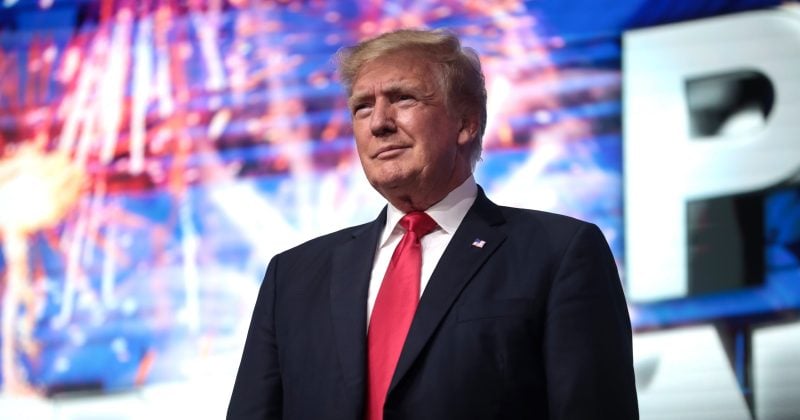
Photo: Gage Skidmore from Surprise, AZ, United States of America / Wikimedia Commons / CC BY-SA 2.0 (https://creativecommons.org/licenses/by-sa/2.0)

Trump pressures Thune to cancel August recess over voter ID bill, adding uncertainty to legislative calendar

The push to pass the SAVE America Act before midterms could delay other Senate business, including crypto regulation and stablecoin legislation still waiting in the queue.

President Trump took to Truth Social on July 27 to publicly pressure Senate Majority Leader John Thune into scrapping the Senate’s five-week August recess, demanding lawmakers stay in Washington to pass the SAVE America Act.

The SAVE America Act, formally the Safeguard American Voter Eligibility Act (H.R. 7296), would require documentary proof of US citizenship for federal voter registration. Think passports, certified birth certificates, that sort of thing, plus photo ID at the polls. It already cleared the House. The Senate is the problem.

The math doesn’t math

The Senate splits 53-47 in favor of Republicans. Overcoming a filibuster requires 60 votes. That means at least seven Democrats would need to cross the aisle.

Advertisement

Thune’s response was diplomatic but telling. He indicated willingness to keep the Senate in session, but only if someone could show him a viable path to actually passing the bill.

Senator Mike Lee of Utah has been among the loudest voices backing Trump’s demand, framing the SAVE America Act as essential ahead of the 2026 midterm elections. Several other Republican senators have echoed that sentiment, arguing that voter eligibility safeguards need to be locked in before November.

Why crypto markets should care about a voter ID bill

The Senate’s bandwidth is finite. Every week spent on a bill without a clear path to passage is a week not spent on the stack of financial legislation still awaiting floor time. Stablecoin regulation, market structure bills, and broader digital asset frameworks have been cycling through committee discussions for months.

The midterm calculation

Everything happening in the Senate right now runs through a single filter: November 2026. Republicans hold a slim majority and can’t afford to look unproductive. Democrats can’t afford to hand Republicans a win on voter ID heading into an election cycle where turnout will be decisive.

For Thune, the calculus is whether the political benefit of a failed symbolic vote outweighs the cost of keeping 53 Republican senators in Washington during August.

Disclosure: This article was edited by Editorial Team. For more information on how we create and review content, see our Editorial Policy.

Trump pressures Thune to cancel August recess over voter ID bill, adding uncertainty to legislative calendar

Trump pressures Thune to cancel August recess over voter ID bill, adding uncertainty to legislative calendar

The push to pass the SAVE America Act before midterms could delay other Senate business, including crypto regulation and stablecoin legislation still waiting in the queue.

Photo: Gage Skidmore from Surprise, AZ, United States of America / Wikimedia Commons / CC BY-SA 2.0 (https://creativecommons.org/licenses/by-sa/2.0)

President Trump took to Truth Social on July 27 to publicly pressure Senate Majority Leader John Thune into scrapping the Senate’s five-week August recess, demanding lawmakers stay in Washington to pass the SAVE America Act.

The SAVE America Act, formally the Safeguard American Voter Eligibility Act (H.R. 7296), would require documentary proof of US citizenship for federal voter registration. Think passports, certified birth certificates, that sort of thing, plus photo ID at the polls. It already cleared the House. The Senate is the problem.

The math doesn’t math

The Senate splits 53-47 in favor of Republicans. Overcoming a filibuster requires 60 votes. That means at least seven Democrats would need to cross the aisle.

Advertisement

Thune’s response was diplomatic but telling. He indicated willingness to keep the Senate in session, but only if someone could show him a viable path to actually passing the bill.

Senator Mike Lee of Utah has been among the loudest voices backing Trump’s demand, framing the SAVE America Act as essential ahead of the 2026 midterm elections. Several other Republican senators have echoed that sentiment, arguing that voter eligibility safeguards need to be locked in before November.

Why crypto markets should care about a voter ID bill

The Senate’s bandwidth is finite. Every week spent on a bill without a clear path to passage is a week not spent on the stack of financial legislation still awaiting floor time. Stablecoin regulation, market structure bills, and broader digital asset frameworks have been cycling through committee discussions for months.

The midterm calculation

Everything happening in the Senate right now runs through a single filter: November 2026. Republicans hold a slim majority and can’t afford to look unproductive. Democrats can’t afford to hand Republicans a win on voter ID heading into an election cycle where turnout will be decisive.

For Thune, the calculus is whether the political benefit of a failed symbolic vote outweighs the cost of keeping 53 Republican senators in Washington during August.

Disclosure: This article was edited by Editorial Team. For more information on how we create and review content, see our Editorial Policy.