
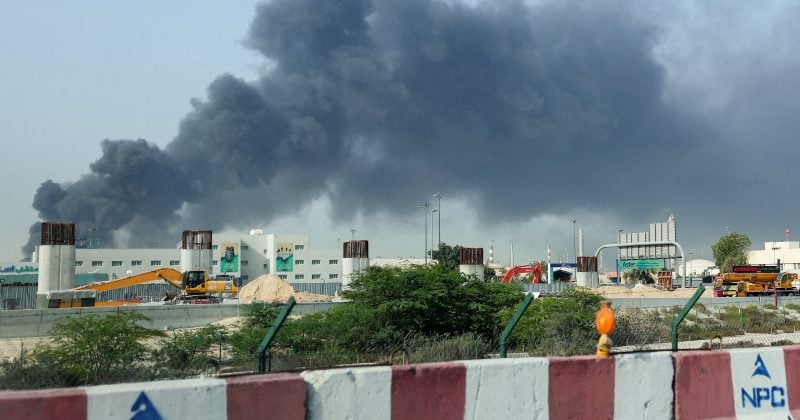
US airstrikes hit Iranian bridges, port amid ongoing conflict

https://www.the-independent.com/news/world/middle-east/dubai-strait-hormuz-port-iran-jebel-ali-b3014367.html

US airstrikes hit Iranian bridges, port amid ongoing conflict

Strait of Hormuz traffic normalization

The United States has conducted airstrikes on key infrastructures in southern Iran, targeting bridges and a port, according to reports from Iranian media. This marks the sixth consecutive night of U.S. military action in the ongoing conflict between the two nations, which commenced in late June 2026. The escalation comes as the U.S. aims to undermine Iran’s logistical capabilities, particularly its control over the Strait of Hormuz, a critical passageway for global oil transport. Observers note that the strikes on structures like those in Bandar Khamir and Chabahar port could further exacerbate the tensions, with Iran continuing its retaliatory attacks on U.S. military positions in the region.

Advertisement

Market indicators suggest that the recent escalation may lead to a decrease in the likelihood of traffic normalization through the Strait of Hormuz by the end of August. The market pricing for the scenario where the Strait’s traffic returns to normal by August 31 has fallen to 11.5% from 18% a week ago, reflecting concerns over sustained military actions and Iranian control measures. This development underscores the significant impact of military dynamics on the regional economic outlook and the operations of critical trade routes.

Key Takeaways

  • U.S. airstrikes on Iranian infrastructure appear to indicate an escalation in military activities, with potential implications for regional trade routes.
  • Market pricing suggests a decreased probability of the Strait of Hormuz traffic normalizing by August 31, consistent with ongoing geopolitical tensions.
  • Observers note that the current military status shows no indications of de-escalation, suggesting potential for continued disruption in the region.

What to Watch

Key developments to monitor include potential diplomatic engagements or peace initiatives that could alter the current trajectory of the conflict between the U.S. and Iran. Announcements from high-level officials, such as Iran’s Supreme Leader or the U.S. President, could provide insights into possible shifts toward de-escalation. Additionally, changes in the status of the Strait of Hormuz, as tracked by live vessel monitoring, will be critical in assessing the likelihood of traffic normalization in the near term. The geopolitical landscape remains fluid, with significant events likely to influence market expectations and regional stability.

Get live prediction-market analysis, powered by Vera. Sign up for Vera.

Disclosure: This article was edited by Estefano Gomez. For more information on how we create and review content, see our Editorial Policy.

US airstrikes hit Iranian bridges, port amid ongoing conflict

US airstrikes hit Iranian bridges, port amid ongoing conflict

Strait of Hormuz traffic normalization

https://www.the-independent.com/news/world/middle-east/dubai-strait-hormuz-port-iran-jebel-ali-b3014367.html

The United States has conducted airstrikes on key infrastructures in southern Iran, targeting bridges and a port, according to reports from Iranian media. This marks the sixth consecutive night of U.S. military action in the ongoing conflict between the two nations, which commenced in late June 2026. The escalation comes as the U.S. aims to undermine Iran’s logistical capabilities, particularly its control over the Strait of Hormuz, a critical passageway for global oil transport. Observers note that the strikes on structures like those in Bandar Khamir and Chabahar port could further exacerbate the tensions, with Iran continuing its retaliatory attacks on U.S. military positions in the region.

Advertisement

Market indicators suggest that the recent escalation may lead to a decrease in the likelihood of traffic normalization through the Strait of Hormuz by the end of August. The market pricing for the scenario where the Strait’s traffic returns to normal by August 31 has fallen to 11.5% from 18% a week ago, reflecting concerns over sustained military actions and Iranian control measures. This development underscores the significant impact of military dynamics on the regional economic outlook and the operations of critical trade routes.

Key Takeaways

  • U.S. airstrikes on Iranian infrastructure appear to indicate an escalation in military activities, with potential implications for regional trade routes.
  • Market pricing suggests a decreased probability of the Strait of Hormuz traffic normalizing by August 31, consistent with ongoing geopolitical tensions.
  • Observers note that the current military status shows no indications of de-escalation, suggesting potential for continued disruption in the region.

What to Watch

Key developments to monitor include potential diplomatic engagements or peace initiatives that could alter the current trajectory of the conflict between the U.S. and Iran. Announcements from high-level officials, such as Iran’s Supreme Leader or the U.S. President, could provide insights into possible shifts toward de-escalation. Additionally, changes in the status of the Strait of Hormuz, as tracked by live vessel monitoring, will be critical in assessing the likelihood of traffic normalization in the near term. The geopolitical landscape remains fluid, with significant events likely to influence market expectations and regional stability.

Get live prediction-market analysis, powered by Vera. Sign up for Vera.

Disclosure: This article was edited by Estefano Gomez. For more information on how we create and review content, see our Editorial Policy.