US government considers FINRA-style regulator for AI oversight, and crypto should pay attention
Google DeepMind's CEO proposed a self-regulatory body for frontier AI models that mirrors Wall Street's own watchdog, with implications that could ripple into the decentralized AI space.
+15.1% (FY ended 2025-12-31 vs FY ended 2024-12-31) 10-K
Annual net income
132,170,000,000 USD (FY ended 2025-12-31, attributable to the company) 10-K
Annual operating margin
32.0% (FY ended 2025-12-31)
Forward P/E
Unavailable: no dated forecast source
Gloria daily close for session Oct 27, 2026. Market cap and trailing P/E use this close with the SEC share total and trailing diluted earnings, each dated next to its figure. Annual revenue, revenue growth, net income and margin show their own fiscal period and link the 10-K. Current context may postdate this article.
Alphabet Inc. and its peers
Company
Price
Market cap
P/E (trailing)
Forward P/E
Annual revenue (USD)
Annual revenue growth
Annual net income (USD)
Operating margin
Alphabet Inc.
GOOGL · Price dated Oct 27, 2026 · tokenized GOOGLx
3,333,751,000FY ended 2025-12-31, attributable to the company · 10-K
75.8%FY ended 2025-12-31
Missing figures stay unavailable. Forward P/E requires a dated source. Annual revenue, revenue growth, net income and margin come from each company's own 10-K, in US dollars, and each row shows that fiscal year. Revenue growth compares the fiscal year with the prior year stated in the same 10-K. Net income is the full year amount attributable to the company, or available to common stockholders where the filing states only that, or consolidated net income. Each row names its basis. Trailing P/E reads "Not meaningful" when the dated trailing diluted EPS is a loss or zero. An operating margin appears only when the filing states both the operating income and the revenue for the same year.
Sources: SEC filings, Gloria daily closes and CoinGecko. Oldest record refresh: Oct 28, 2026, 4:51 PM EDT. Refresh is not a price or filing date. Each row shows its price date and its annual fiscal period. Peers use industry code and company size, or editorial selection. Market cap multiplies that row price by the company share total the latest SEC filing states for every share class together. Trailing P/E divides it by trailing diluted earnings from SEC filings. Rolled earnings per share are approximate because share counts can change between periods. Both appear only when the SEC data carries its date, so they are estimates at one price date, not synchronized filing valuations. Not investment advice.
Token vs underlying stock
Current comparison for GOOGL. Historical observations may postdate this article.
Split-adjusted regular-session stock closes from the existing Gloria shared history, paired only with an observed token price within 45 minutes of 16:00 New York time. Up to 60 matched sessions. No interpolation or missing-date fill. Weekends and known early closes are omitted. Token units are not adjusted for issuer multipliers or dividend treatment. This compares quoted prices, not fair value, executable premiums or arbitrage returns. Solid line: token. Dashed line: stock. Exact quote times and values appear below. Historical observations. Retrieval refers to the token source. Token quote times use UTC. The fixed cohort shows its oldest member fetch.
Alphabet token vs Alphabet stock: exact source values
Quoted token and share units can have different rights, multipliers and dividend treatment. This is not an executable premium or arbitrage signal.
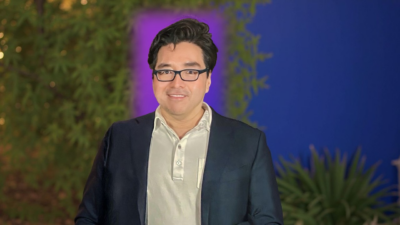
Google DeepMind CEO Demis Hassabis has proposed creating an independent standards body for frontier AI models, structured after the Financial Industry Regulatory Authority (FINRA). The idea is straightforward: build a self-regulatory organization funded by the AI industry itself, operating under federal oversight, that would voluntarily test the most powerful AI systems before they hit the market.
The initial proposal includes a 30-day review period before deployment of frontier models, giving the body time to evaluate risks before these systems go live.
What the FINRA model actually means for AI
FINRA is the private corporation that regulates broker-dealers in the US. It’s not a government agency, but it operates with SEC oversight and enforcement teeth. Brokerages fund it, follow its rules, and submit to its audits.
Hassabis wants to replicate that dynamic for AI. The proposed body would focus specifically on cutting-edge systems, the kind being developed by DeepMind, OpenAI, and Anthropic.
The proposal builds on a series of White House initiatives throughout 2026, including direct meetings between administration officials and AI executives. A June executive order aimed at balancing AI innovation with national security concerns laid the groundwork. A coalition letter addressing biological risks from AI added urgency to the conversation.
AI, tech, and the markets they move—in one daily briefing.
Daily. Free. Join 34,000+ readers across crypto, finance, and policy.
Why the crypto and decentralized AI world should care
No specific cryptocurrency tokens or blockchain protocols were mentioned in Hassabis’s proposal.
If the standards body requires model provenance verification, meaning proof of where a model came from, how it was trained, and what data it used, blockchain-based solutions could become genuinely useful infrastructure. Immutable records of model training data, cryptographic certification of safety evaluations, and transparent audit trails are exactly the kind of problems that distributed ledger technology was designed to solve.
What this means for investors
For the major AI labs, this is largely good news. Google, OpenAI, Microsoft, and Anthropic have the resources to participate in and potentially shape a self-regulatory framework. Voluntary pre-release testing is far more palatable than mandatory government licensing, which remains the alternative if the industry doesn’t self-organize.
The competitive dimension between the US and China adds another layer. Washington has clear incentives to create a regulatory environment that keeps AI development onshore while maintaining safety guardrails.
Investors should watch for two signals. First, whether the proposed body remains genuinely voluntary or evolves into a de facto requirement for market access. FINRA membership technically isn’t mandatory, but good luck operating as a broker-dealer without it. Second, whether the 30-day review period expands over time, creating longer delays that benefit incumbents with existing deployed models at the expense of newer entrants.
Disclosure: This article was edited by Editorial Team. For more information on how we create and review content, see our Editorial Policy.