
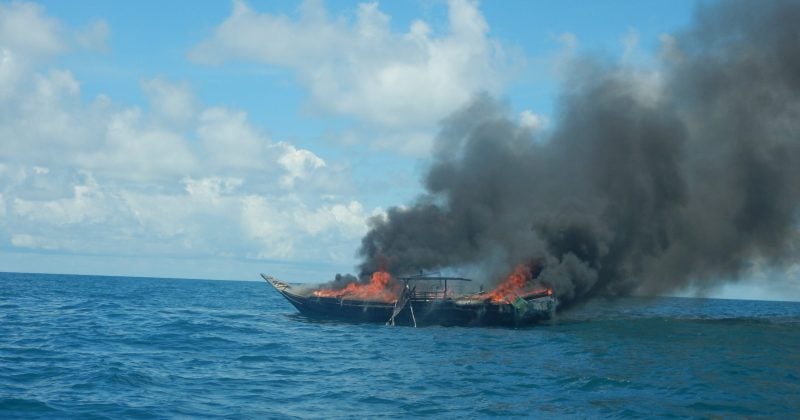
US forces reportedly destroy fishing boats after mistaking them for IRGC speedboats
Iranian state media says around 30 civilian vessels were destroyed at ports in Bandar Abbas and Asaluyeh during strikes on July 8–9
The Strait of Hormuz does not forgive confusion. On July 8 and 9, 2026, US forces struck what they believed were IRGC-associated vessels in southern Iran. Iranian state media reported afterward that the targets were civilian fishing boats, with roughly 30 vessels destroyed at piers in two port cities.
The locations were Bandar Abbas and Asaluyeh, both significant nodes in Iran’s southern fishing economy. Iranian reports put the per-boat damage at approximately 2 billion tomans each, making the total financial blow to local fishing communities substantial.
What happened and where
The strikes hit moored boats at port infrastructure, not vessels at sea during a confrontation. That detail matters, because IRGC speedboat tactics typically involve fast-moving engagements in open water, not stationary fishing fleets tied to docks.
Iranian state media framed the incident as a misidentification, with US forces apparently acting on intelligence that placed IRGC assets at those locations. The US military has not publicly confirmed the strikes as of the time of reporting.
Bandar Abbas sits at the mouth of the Strait of Hormuz, the narrow waterway through which a significant share of the world’s seaborne oil passes. Asaluyeh, further along the Persian Gulf coast, is home to major energy infrastructure including phases of Iran’s South Pars gas field.
The news moving money, markets, and the world—before your day starts.
Daily. Free. Join 34,000+ readers across crypto, finance, and policy.
This was not the first incident of this kind in 2026. On May 5, Iranian reports described civilian casualties from alleged US strikes on boats in the Strait of Hormuz region, a claim that conflicted with US military accounts at the time.
The Hormuz context that makes this bigger than a mistaken strike
The IRGC’s naval wing has long relied on swarm tactics using small, fast boats, making identification in high-pressure situations genuinely difficult. Notable incidents from 2020 and 2021 already established a modern baseline for these close-quarters confrontations, with US Navy ships and IRGC vessels coming within dangerous proximity on multiple occasions.
What this means for markets and energy prices
Roughly one-fifth of the world’s oil supply moves through the Strait of Hormuz, and any credible threat to that corridor tends to register almost immediately in crude prices.