
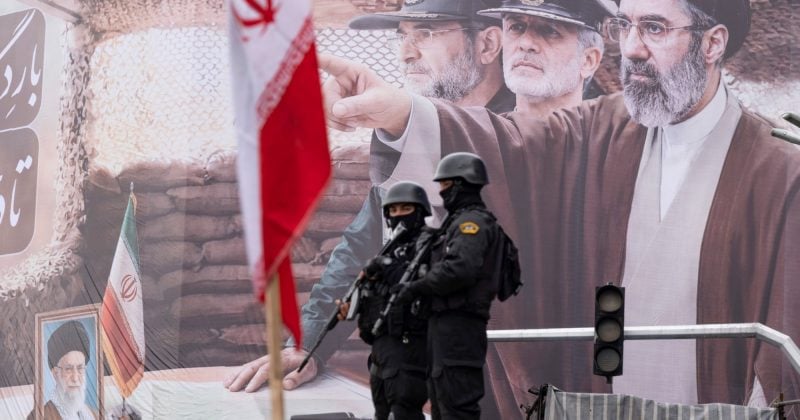
US military says it hit dozens of iran’s IRGC targets

https://theweek.com/world-news/iran-islamic-revolutionary-guard-corps

US military says it hit dozens of iran’s IRGC targets

Iran military action against a gulf state

The United States military has confirmed that it conducted strikes on dozens of targets linked to Iran’s Islamic Revolutionary Guard Corps (IRGC). This action is part of the ongoing U.S.-Iran conflict that has intensified in 2026, with reciprocal strikes between U.S. Central Command (CENTCOM) and the IRGC. The strikes reportedly targeted key military infrastructure, including drone facilities and maritime capabilities, as a measure to reduce threats to U.S. forces and regional stability. These developments come in the wake of Iranian missile attacks on U.S. forces in the Middle East, prompting a forceful U.S. response.

Advertisement

Key Takeaways

  • The U.S. military’s recent strikes on IRGC targets appear to have significantly heightened tensions in the region.
  • Market pricing suggests participants see an increased likelihood of further Iranian actions, although this is tempered by potential diplomatic interventions.
  • The latest developments are consistent with a scenario where Iranian retaliation could target U.S. interests rather than Gulf states directly.

What to Watch

Observers should monitor any statements or actions from key Iranian figures such as Supreme Leader Ali Khamenei and IRGC Commander Hossein Salami, as these could provide indications of Iran’s next moves. Additionally, diplomatic efforts by countries like Qatar or Oman could alter the current trajectory if successful. The evolution of the conflict and any further military actions will be pivotal in determining whether the market pricing remains supportive of a YES outcome for Iranian military action against a Gulf state.

Get live prediction-market analysis, powered by Vera. Sign up for Vera.

Disclosure: This article was edited by Estefano Gomez. For more information on how we create and review content, see our Editorial Policy.

US military says it hit dozens of iran’s IRGC targets

US military says it hit dozens of iran’s IRGC targets

Iran military action against a gulf state

https://theweek.com/world-news/iran-islamic-revolutionary-guard-corps

The United States military has confirmed that it conducted strikes on dozens of targets linked to Iran’s Islamic Revolutionary Guard Corps (IRGC). This action is part of the ongoing U.S.-Iran conflict that has intensified in 2026, with reciprocal strikes between U.S. Central Command (CENTCOM) and the IRGC. The strikes reportedly targeted key military infrastructure, including drone facilities and maritime capabilities, as a measure to reduce threats to U.S. forces and regional stability. These developments come in the wake of Iranian missile attacks on U.S. forces in the Middle East, prompting a forceful U.S. response.

Advertisement

Key Takeaways

  • The U.S. military’s recent strikes on IRGC targets appear to have significantly heightened tensions in the region.
  • Market pricing suggests participants see an increased likelihood of further Iranian actions, although this is tempered by potential diplomatic interventions.
  • The latest developments are consistent with a scenario where Iranian retaliation could target U.S. interests rather than Gulf states directly.

What to Watch

Observers should monitor any statements or actions from key Iranian figures such as Supreme Leader Ali Khamenei and IRGC Commander Hossein Salami, as these could provide indications of Iran’s next moves. Additionally, diplomatic efforts by countries like Qatar or Oman could alter the current trajectory if successful. The evolution of the conflict and any further military actions will be pivotal in determining whether the market pricing remains supportive of a YES outcome for Iranian military action against a Gulf state.

Get live prediction-market analysis, powered by Vera. Sign up for Vera.

Disclosure: This article was edited by Estefano Gomez. For more information on how we create and review content, see our Editorial Policy.