
Via exp1.com
Wall Street recovers from volatile week as AI boom shows first real cracks
Tech sell-offs, inflated valuations, and $159 billion in hyperscaler bonds are forcing investors to rethink the AI trade, with ripple effects hitting crypto markets
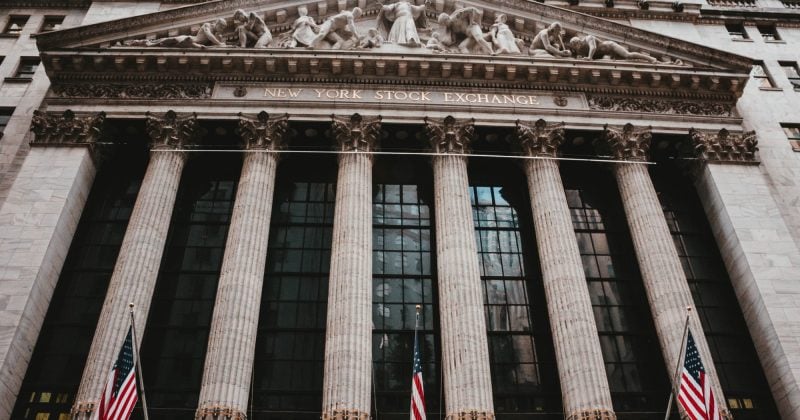
Wall Street managed a partial recovery after one of its roughest stretches of the year, but the bruises are still visible. The week of July 18-25 saw the Dow Jones drop more than 0.75%, the S&P 500 slide roughly 1%, and the Nasdaq fall approximately 1.4% in a single session, all driven by a growing suspicion that the AI investment thesis might be running out of runway.
The AI narrative hits a wall
Nvidia and its cohort of AI chipmakers bore the brunt of the sell-off. The frustration among investors was palpable. Some market participants described the AI investment narrative as “exhausting,” which is Wall Street’s polite way of saying they’re not sure the math still works.
The capital flowing into AI infrastructure this year has been staggering. Hyperscalers, the cloud computing giants that underpin the AI boom, issued $159 billion in bonds earlier in 2026. That figure represents a marked increase from 2024 levels, and it underscores just how aggressively banks and tech companies have been financing their AI ambitions.
Crypto catches a cold from Wall Street’s fever
The volatility didn’t stay contained in equities. Cryptocurrencies faced downward pressure as shifting investor sentiment spilled across asset classes.
Bitcoin’s performance during this stretch was notably weak relative to historical seasonal patterns. Analysts attributed the underperformance partly to a broader reallocation of capital toward AI-focused investments.
The news moving money, markets, and the world—before your day starts.
Daily. Free. Join 34,000+ readers across crypto, finance, and policy.
Ethereum drew more favorable attention from analysts. Some compared it to pre-AWS Amazon or pre-AI Nvidia, suggesting the network might be in the earliest innings of a major growth phase.
What this means for investors
The partial recovery suggests the market isn’t ready to abandon the AI trade entirely. When $159 billion in hyperscaler bonds are floating around and chipmaker valuations assume near-perfect execution for years into the future, the margin for disappointment is razor-thin.
Bitcoin’s seasonal underperformance is worth monitoring closely. If the pattern persists, it could signal a structural shift in how institutional capital views crypto relative to AI investments. The two asset classes are increasingly competing for the same marginal dollar, and right now, AI has the better pitch deck.