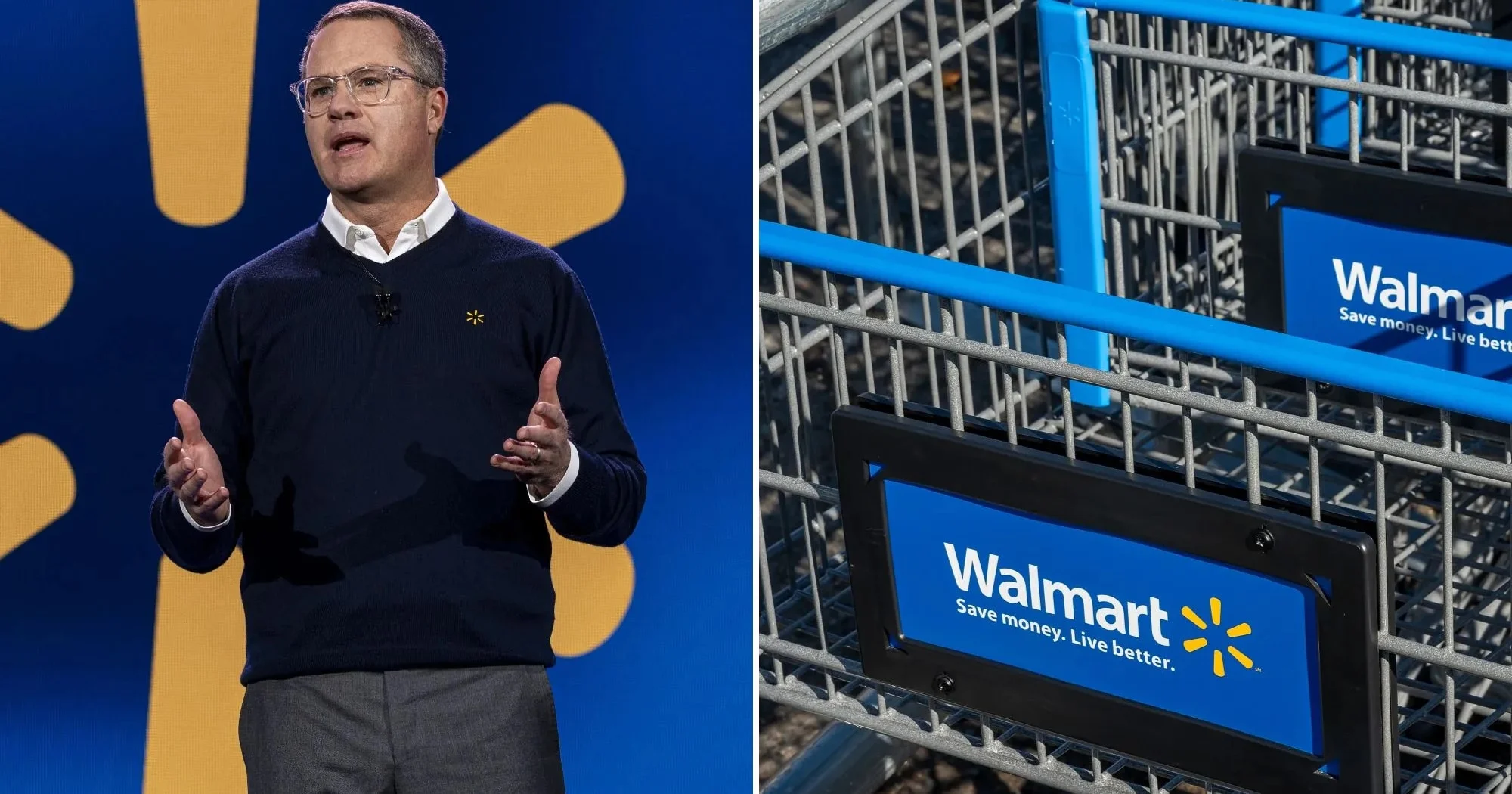
America's retail bellwether posted its first earnings miss in over two years, flagging financial strain among budget-conscious shoppers as tariff costs loom.
Walmart, the company that essentially serves as a real-time dashboard for how everyday Americans are doing financially, just flashed a warning signal. The retail giant reported disappointing guidance that sent shares tumbling, even as it simultaneously raised its broader sales and earnings forecast. A contradictory picture, sure. But the details underneath tell a coherent and uncomfortable story.
The core issue: low- and middle-income consumers are pulling back. These are the shoppers who form the backbone of Walmart’s customer base, and they’re becoming increasingly selective about what goes in the cart. When the nation’s largest retailer says its most price-sensitive customers are feeling the squeeze, that’s not just a Walmart problem. It’s an everybody problem.
The numbers behind the stumble
Walmart posted its first earnings miss in over two years. For a company that had been on a remarkably consistent beat streak, that alone was enough to rattle investors.
The guidance was the real gut punch. Rising fuel costs and broader consumer financial stress factored into a forecast that fell short of Wall Street expectations. Shares responded accordingly, with the stock facing significant declines in the aftermath.
Here’s what makes this particularly interesting, though. Walmart actually raised its sales and earnings forecast at the same time. The company is seeing strong top-line demand. People are still showing up to Walmart. They’re just buying differently, prioritizing essentials and skipping discretionary items.
Think of it like a household that still goes grocery shopping every week but stops tossing snacks and household upgrades into the basket. The trips continue. The ticket shrinks.
The tariff time bomb
Layered on top of the consumer stress story is a tariff problem that hasn’t fully materialized yet. Walmart flagged that tariff-related costs are beginning to rise, but the company is essentially sitting on a buffer of older, cheaper inventory.
In English: Walmart bought a lot of its current stock before the latest round of tariff increases hit. As that inventory sells through and gets replaced with goods carrying higher import costs, prices on shelves will start creeping up. The full effect of tariffs on consumer pricing may not become apparent until early 2026, according to the company’s own timeline.
That’s the slow-motion part of this story that markets may not be fully pricing in. Walmart is telling you, in plain language, that things are going to get more expensive. Not tomorrow, but steadily, over the next several quarters. For a retailer whose entire value proposition is low prices, that’s a strategic headache of the highest order.
Walmart has historically been willing to absorb cost increases to maintain its price leadership. But there’s a limit to how much margin compression any company, even one doing hundreds of billions in revenue, can stomach. At some point, those costs get passed to the consumer. The same consumer who’s already pulling back.
Why Walmart’s health check matters beyond retail
Walmart isn’t just a store. It’s the closest thing the US economy has to a consumer health thermometer. With operations spanning groceries, general merchandise, pharmacy, and financial services, its performance captures spending behavior across nearly every essential category.
When Walmart says lower-income households are under stress, that signal carries weight that extends well beyond the retail sector. Consumer spending accounts for roughly two-thirds of US economic activity. If the bottom half of the income distribution is tightening belts, the ripple effects touch everything from consumer credit quality to payments volume to housing demand.
For crypto markets, this matters more than it might seem at first glance. Risk appetite across all asset classes tends to contract when consumer confidence erodes. Budget-conscious households aren’t allocating to Bitcoin. And institutional investors watch bellwether earnings like Walmart’s as part of their broader macro assessment. A deteriorating consumer backdrop tends to pull capital toward safety, not speculation.
The raised sales forecast offers a counterpoint, and an important one. Walmart is clearly gaining market share, likely pulling shoppers away from pricier competitors as households trade down. That’s a pattern we’ve seen in prior economic slowdowns: Walmart gets bigger when times get tough. The question is whether growing volume can offset shrinking margins as input costs rise.
Investors watching the broader retail landscape should pay close attention to how other major retailers report in the coming weeks. If Target, Costco, and Dollar General echo similar themes of consumer selectivity and tariff anxiety, the narrative shifts from a Walmart-specific story to a macro one. And macro narratives have a way of reshaping portfolio allocations across equities, fixed income, and digital assets alike.
The early 2026 timeline for full tariff impact is the date to circle. That’s when Walmart’s inventory buffer runs out and the real pricing pressure begins. Between now and then, the company is essentially running a slow countdown, and every quarterly update will be watched for signs of whether consumers can absorb the hit or whether something breaks first.