Blackstone’s Jon Gray says AI infrastructure needs more equity financing
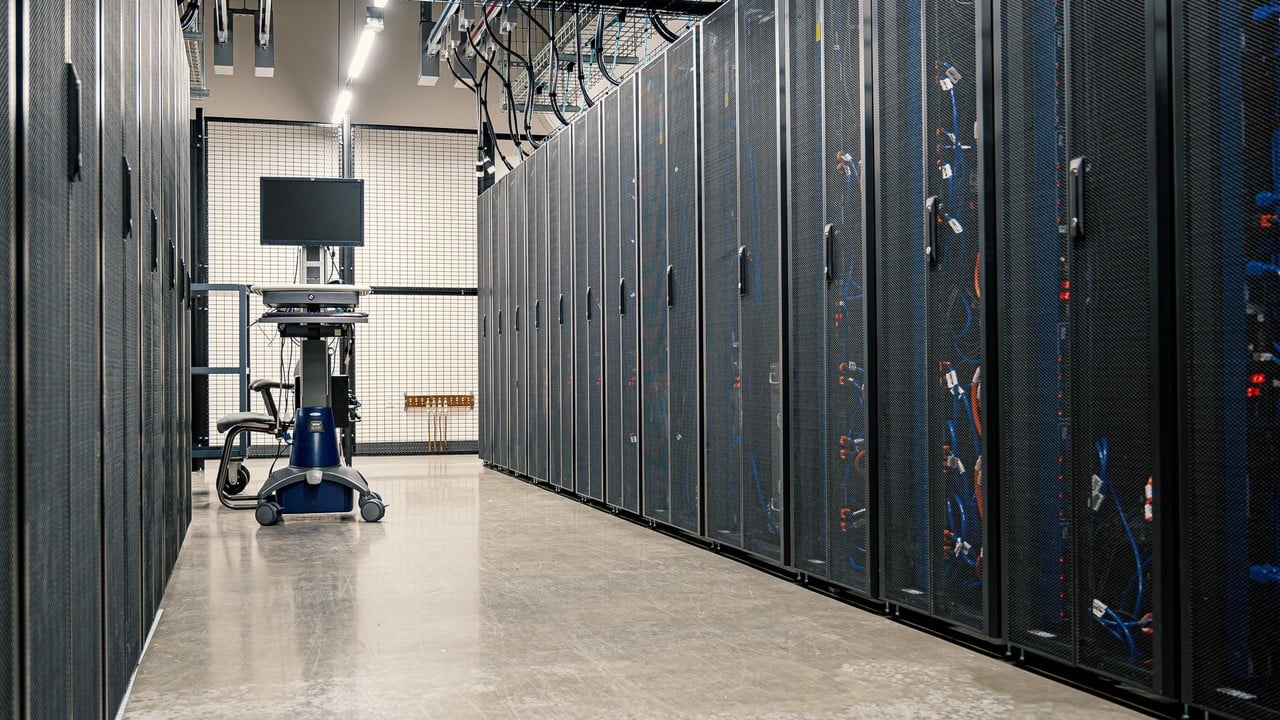
Photo: Brett Sayles / Pexels
The Blackstone president warns that lenders are piling up concentration risk as the AI buildout's capital demands keep climbing
The AI boom has a financing problem, and one of Wall Street’s biggest dealmakers is saying it out loud. Blackstone President Jon Gray said Tuesday that the artificial intelligence infrastructure buildout will need more equity financing, because lenders are becoming too exposed to the companies doing the building.
When the firm that just helped arrange part of a $63 billion AI financing package says debt alone can’t carry the load, the market tends to listen.
Gray’s case against an all-debt AI buildout
Gray made the remarks at the Hong Kong Monetary Authority’s Global Financial Leaders’ Investment Summit. His core argument centered on concentration risk, which shows up in two places: across the AI sector as a whole, and inside individual companies.
Gray also pointed to a basic asymmetry between owning a company and lending to it. Shareholders can ride a company’s growth higher. Lenders, by contrast, mostly collect interest and get their principal back.
That lopsided trade gets less appealing as the loans get bigger and the borrowers get more concentrated. Taking on growing downside risk for a fixed upside is not a deal most credit investors want to keep scaling indefinitely.
“There’s going to be more equity needed across this space to keep up with these enormous demands,” Gray said.
The numbers behind the warning
The scale of the spending explains why Gray is raising the issue now. Emmanuel Roman, also speaking in the context of the summit, put AI-related capital spending at approximately $10 trillion over the next five years. He also cited roughly $550 billion in AI-related debt issued in 2026 so far.
Goldman Sachs landed in a similar neighborhood. In a November 2 report, the bank estimated that global data-center demand will require about $8.5 trillion in capital spending over the next five years.
Gray’s own projections focus on the biggest spenders. He expects combined capital expenditure by five hyperscalers, the giant cloud providers that operate massive data-center networks, to reach $820 billion in 2026. That figure would equal about 2.5% of US GDP.
The news moving money, markets, and the world—before your day starts.
Daily. Free. Join 34,000+ readers across crypto, finance, and policy.
For comparison, the same group spent $415 billion in 2025. Spending roughly doubling in a single year is the kind of growth curve that makes even well-capitalized balance sheets reach for outside funding.
Gray said major tech firms including Meta, Google, and Oracle are expected to make significant equity raises. He also pointed to anticipated IPOs from SpaceX and Anthropic as part of the same broader shift toward equity.
Blackstone already has skin in the game
Gray’s comments are not abstract. Blackstone is one of the participants in a $63 billion financing package, announced in late October, tied to Broadcom equipment leased to Anthropic.
Blackstone’s role in that deal is second-lien financing. In plain terms, second-lien lenders stand behind first-lien lenders in the repayment line if something goes wrong. They usually earn a higher return for accepting that spot, but they also wear more risk.
The Anthropic deal also illustrates the structure Gray is describing. Hardware gets built, leased to an AI company, and financed largely through debt. Repeat that pattern across enough companies and enough data centers, and the lending side of the market gets very crowded around a small group of names.
Why the debt-heavy model is under strain
For most of the current AI cycle, debt has been the convenient answer. Borrowing lets companies fund huge projects without diluting existing shareholders. With roughly $550 billion in AI-related debt issued in 2026 alone, by Roman’s count, that playbook has clearly been popular.
Equity works differently. It absorbs losses first, and it captures gains without a ceiling. That makes it a better fit for projects whose payoff could be enormous but remains uncertain. Gray’s argument amounts to matching the funding tool to the risk profile of the thing being funded.
What this means for investors and the AI buildout
For public market investors, the most immediate implication is supply. If Meta, Google, and Oracle do raise significant equity, as Gray expects, that means more shares coming to market. Existing shareholders typically face dilution in those raises, even as the companies gain financial breathing room.
The anticipated listings from SpaceX and Anthropic would add another layer. Large IPOs give public investors direct access to companies that have so far been funded mostly through private rounds and, in Anthropic’s case, sizable debt-backed equipment arrangements.
There is also a systemic angle. Hyperscaler capex at about 2.5% of US GDP means the AI buildout is no longer a niche corporate story. It is a macroeconomic one. If funding leans too heavily on debt and that debt sits with a concentrated set of lenders, problems in the AI sector could travel further through the financial system than they otherwise would.
Gray’s answer is that shareholders will need to carry more of the weight. The next few quarters of equity raises and IPO filings will show whether markets agree, and how much appetite public investors have for owning a bigger slice of the AI bill.
Disclosure: This article was edited by Diego Almada Lopez. For more information on how we create and review content, see our Editorial Policy.
More in Finance
See all-
 Block reaches three-year deferred prosecution agreement with DOJ over money laundering charge
-
 Bitcoin trading activity cools in October as options volume rises
-
 OpenAI adds voice chat to ChatGPT’s personal finance tool for US users
-
 Strategy’s MSTR daily trading volume surpasses Boeing’s
-
 Kalshi’s midterm trading volume tops $1 billion as traders bet on Democrats
-
 Bitwise and Coinbase executives back CCIP’s split model for real-world blockchain use

