
Nexo Earn with Nexo
Monte secures first win of IEM Cologne Stage 3 as crypto sponsorships reshape esports

Monte secures first win of IEM Cologne Stage 3 as crypto sponsorships reshape esports

The Ukrainian Counter-Strike 2 squad's Major run highlights a growing entanglement between competitive gaming and the crypto industry

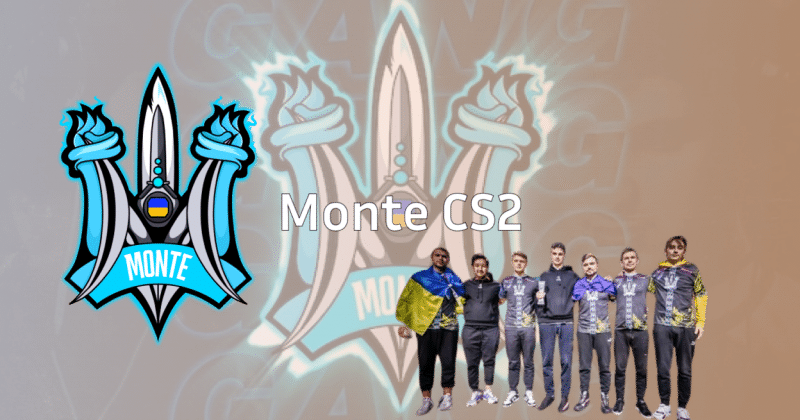
Monte Esports picked up their first victory in Stage 3 of the IEM Cologne Major 2026, a result that keeps the Ukrainian Counter-Strike 2 roster alive in one of the most prestigious tournaments in competitive gaming.

The IEM Cologne Major carries a $1.25 million prize pool. It’s also the first Major hosted in Cologne in a decade.

How Monte got here

Monte’s path to Stage 3 was anything but comfortable. On June 9, 2026, the team faced paiN Gaming in a do-or-die Swiss Stage 2 match. Lose, and their Major run ends. Win, and they advance to the top-16 phase.

They won. Monte took the series 2-0, starting with a dominant 13-5 performance on Nuke before closing things out 13-11 on Dust II.

Advertisement

Oscar “AZUWU” Bell was the standout performer, racking up 39 kills across the two maps.

The victory punched Monte’s ticket to Stage 3, where Aurora Gaming handed them a 2-0 loss earlier in the stage. So Monte’s first Stage 3 win represents a course correction after a rough start, not a continuation of the momentum from their paiN victory.

The crypto angle nobody’s ignoring

Aurora Gaming, the team that beat Monte earlier in Stage 3, recently announced a sponsorship deal with Polymarket, the prediction market platform. That’s a crypto-native company putting its brand on a team competing at a Counter-Strike Major.

The Polymarket-Aurora partnership is particularly interesting because Polymarket isn’t a traditional crypto exchange. It’s a prediction market, which means its core product already overlaps conceptually with what esports fans do naturally: make predictions about match outcomes, argue about which team is better, and follow statistical performance obsessively.

For the teams themselves, crypto sponsorships represent a revenue stream that traditional sports sponsors have been slower to provide. Esports organizations have notoriously thin margins. Many operate at a loss.

What this means for investors watching the esports-crypto intersection

The risk, as always, is sustainability. Crypto sponsorships in esports have a checkered history. During the last bull cycle, several crypto sponsors signed splashy deals with teams and leagues, only to pull back when market conditions deteriorated. FTX’s collapse took several sponsorship agreements down with it.

The Polymarket sponsorship of Aurora is arguably the closest any of these concepts has come to real integration at a top-tier event. If Polymarket eventually launches esports-specific prediction markets, the sponsorship starts looking less like marketing and more like customer acquisition.

Disclosure: This article was edited by Editorial Team. For more information on how we create and review content, see our Editorial Policy.

Monte secures first win of IEM Cologne Stage 3 as crypto sponsorships reshape esports

Monte secures first win of IEM Cologne Stage 3 as crypto sponsorships reshape esports

The Ukrainian Counter-Strike 2 squad's Major run highlights a growing entanglement between competitive gaming and the crypto industry

Monte Esports picked up their first victory in Stage 3 of the IEM Cologne Major 2026, a result that keeps the Ukrainian Counter-Strike 2 roster alive in one of the most prestigious tournaments in competitive gaming.

The IEM Cologne Major carries a $1.25 million prize pool. It’s also the first Major hosted in Cologne in a decade.

How Monte got here

Monte’s path to Stage 3 was anything but comfortable. On June 9, 2026, the team faced paiN Gaming in a do-or-die Swiss Stage 2 match. Lose, and their Major run ends. Win, and they advance to the top-16 phase.

They won. Monte took the series 2-0, starting with a dominant 13-5 performance on Nuke before closing things out 13-11 on Dust II.

Advertisement

Oscar “AZUWU” Bell was the standout performer, racking up 39 kills across the two maps.

The victory punched Monte’s ticket to Stage 3, where Aurora Gaming handed them a 2-0 loss earlier in the stage. So Monte’s first Stage 3 win represents a course correction after a rough start, not a continuation of the momentum from their paiN victory.

The crypto angle nobody’s ignoring

Aurora Gaming, the team that beat Monte earlier in Stage 3, recently announced a sponsorship deal with Polymarket, the prediction market platform. That’s a crypto-native company putting its brand on a team competing at a Counter-Strike Major.

The Polymarket-Aurora partnership is particularly interesting because Polymarket isn’t a traditional crypto exchange. It’s a prediction market, which means its core product already overlaps conceptually with what esports fans do naturally: make predictions about match outcomes, argue about which team is better, and follow statistical performance obsessively.

For the teams themselves, crypto sponsorships represent a revenue stream that traditional sports sponsors have been slower to provide. Esports organizations have notoriously thin margins. Many operate at a loss.

What this means for investors watching the esports-crypto intersection

The risk, as always, is sustainability. Crypto sponsorships in esports have a checkered history. During the last bull cycle, several crypto sponsors signed splashy deals with teams and leagues, only to pull back when market conditions deteriorated. FTX’s collapse took several sponsorship agreements down with it.

The Polymarket sponsorship of Aurora is arguably the closest any of these concepts has come to real integration at a top-tier event. If Polymarket eventually launches esports-specific prediction markets, the sponsorship starts looking less like marketing and more like customer acquisition.

Disclosure: This article was edited by Editorial Team. For more information on how we create and review content, see our Editorial Policy.