
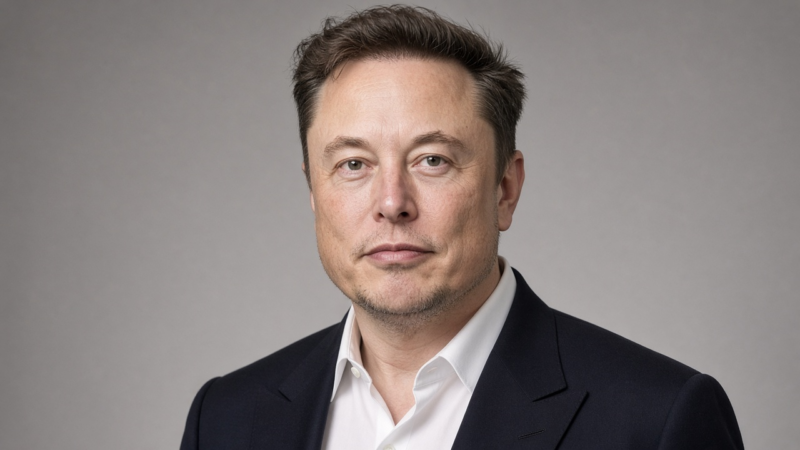
Elon Musk says lenders have nearly stopped funding AI data center firms

Elon Musk says lenders have nearly stopped funding AI data center firms

Musk says debt markets are shutting out AI compute companies without outside revenue, even as SpaceX lands a $40 billion GPU financing package

Elon Musk says the debt markets have largely closed their doors to AI data center companies. The one door still swinging open, conveniently, belongs to his own company.

In a post on X on October 25, 2026, Musk said lenders have nearly stopped funding AI data center firms that lack independent revenue streams. He set that freeze against SpaceX’s recent success in securing a $40 billion debt package aimed mostly at buying Nvidia GPUs.

One borrower gets the keys

Musk’s argument is simple. Companies whose only business is AI compute now face a much harder time borrowing money.

By Musk’s account, SpaceX has the steady paychecks. He credited the financing to the company’s investment-grade credit rating and to the recurring revenue from Starlink, its satellite internet business, and its rocket launch operations.

The $40 billion package ranks as one of the largest transactions in the sector at a moment when credit conditions are tightening.

Advertisement

The debt is expected to be callable. That means SpaceX would have the option to pay it back before it comes due, which gives the borrower some flexibility if conditions change.

The money is set to support GPU deliveries in the first and second quarters of 2027.

The deal did not appear out of nowhere. Reports in early October 2026 said SpaceX was in talks with banks over a $10 billion loan alongside $30 billion in investment-grade debt, figures that together match the size of the final package.

The neocloud squeeze

Musk went further than describing his own good fortune. He warned of significant consolidation among more than 200 smaller AI cloud providers, a group he calls “neoclouds.”

His forecast for that crowd was blunt. Only a few, he predicted, will make it through the current debt squeeze.

The broader backdrop backs up the pressure he describes. Markets have recently seen rising yields and tighter lending terms, which makes borrowing more expensive for everyone.

Companies that lean heavily on AI for their revenue may have the hardest time of all. When a business model revolves around buying chips and renting out the computing power, losing access to debt is not a minor inconvenience.

What this means for the AI infrastructure race

Diversification is starting to look like a competitive advantage in its own right. SpaceX did not win this financing on the strength of its AI plans alone. It won it, by Musk’s telling, because Starlink and launch services give lenders confidence that the bills will get paid either way.

Some perspective is also warranted. The person describing the drought happens to be the one holding the largest umbrella, and Musk’s view of the market is one in which his own company comes out well positioned.

There are a few things worth watching from here. The first is whether any of the more than 200 neoclouds announce mergers, asset sales, or pullbacks in the coming months. The second is execution on SpaceX’s side: the financing is meant to support GPU deliveries in the first and second quarters of 2027, and whether that timeline holds will say a lot about how smoothly a deal of this size converts into actual computing capacity.

Disclosure: This article was edited by Diego Almada Lopez. For more information on how we create and review content, see our Editorial Policy.