
OpenAI launches Dots always-on AI agents to challenge Meta’s Muse

OpenAI launches Dots always-on AI agents to challenge Meta’s Muse

Powered by GPT-6 Astra, Dots can work continuously across thousands of apps using their own cloud computers while learning users’ preferences over time.

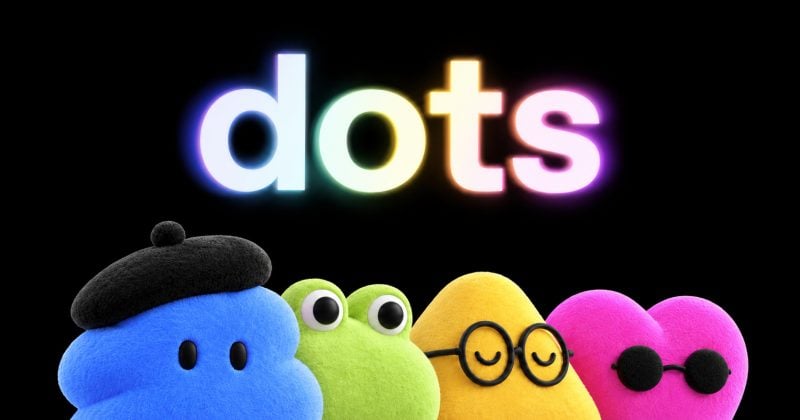
OpenAI has launched Dots, a new class of always-on AI agents designed to work continuously on users’ behalf, putting the ChatGPT maker into more direct competition with Meta’s recently launched Muse assistant.

Dots are powered by GPT-6 Astra and each operate through their own cloud computer, browser and connected applications. OpenAI says they can work toward longer-term goals around the clock, learn from feedback and connect with more than 4,000 apps through its plugin ecosystem.    

The product pushes ChatGPT beyond a model that primarily waits for prompts toward agents that can keep working in the background and surface completed work, questions or decisions when necessary.

A dot can take responsibility for several projects simultaneously without requiring users to manage separate conversation threads or direct each step. Users can also open the agent’s cloud computer to inspect what it is doing and optionally give it access to their own laptop.   

That puts Dots in increasingly direct competition with Meta’s Muse, another personalized AI agent built around persistent context and autonomous task execution. 

Advertisement

Muse launched earlier this month and has quickly become one of Meta’s most prominent AI products, with the company expanding it into computer control, voice interactions, smart glasses and business workflows.

Both products are built around a similar shift in consumer AI: moving from assistants that respond to individual requests toward persistent agents that understand a user over time and can take action without being prompted for every step.

OpenAI demonstrated Dots handling tasks including investigating software bugs reported in Slack, turning designs into working applications, updating research as new data arrives and revising marketing materials when a product launch changes.

For content creators, for example, OpenAI says a dot could monitor incoming interview transcripts, identify potential clips, prepare show notes and draft social posts, while incorporating feedback into future work.    

Users can interact with Dots directly through ChatGPT on web, desktop and mobile, as well as through Slack and Microsoft Teams. OpenAI also plans to add text messaging support. Context follows the agent between those services rather than being isolated to individual conversations.    

Dots can also perform what OpenAI calls “proactive research” while users are away. During that process, the agent can inspect connected apps through read-only tools to look for useful work but cannot independently send messages, alter app content or control a computer.    

Users can establish custom rules determining which actions a dot can take independently, which require approval and which are blocked. More sensitive actions are additionally checked by an automated review system before proceeding.   

OpenAI is initially rolling Dots out to Pro and Business Premium subscribers in eligible markets, while Enterprise, Edu and Healthcare customers can access the beta when enabled by an administrator. The first dot is included with eligible subscriptions at no additional cost.    

The company is also testing specialist dots for enterprises, where individual agents would receive their own identities, credentials and access to company systems to take responsibility for defined roles. OpenAI said early internal testing has included procurement, invoice processing, email marketing, customer support and commercial contracting. Pasted text

OpenAI ultimately envisions users working with teams of dots rather than a single agent, further extending the competition with Meta and other companies racing to make persistent AI agents a new interface for personal and professional computing.

Disclosure: This article was edited by Diego Almada Lopez. For more information on how we create and review content, see our Editorial Policy.
OpenAI launches Dots always-on AI agents to challenge Meta’s Muse

Powered by GPT-6 Astra, Dots can work continuously across thousands of apps using their own cloud computers while learning users’ preferences over time.

OpenAI has launched Dots, a new class of always-on AI agents designed to work continuously on users’ behalf, putting the ChatGPT maker into more direct competition with Meta’s recently launched Muse assistant.

Dots are powered by GPT-6 Astra and each operate through their own cloud computer, browser and connected applications. OpenAI says they can work toward longer-term goals around the clock, learn from feedback and connect with more than 4,000 apps through its plugin ecosystem.    

The product pushes ChatGPT beyond a model that primarily waits for prompts toward agents that can keep working in the background and surface completed work, questions or decisions when necessary.

A dot can take responsibility for several projects simultaneously without requiring users to manage separate conversation threads or direct each step. Users can also open the agent’s cloud computer to inspect what it is doing and optionally give it access to their own laptop.   

That puts Dots in increasingly direct competition with Meta’s Muse, another personalized AI agent built around persistent context and autonomous task execution. 

Advertisement

Muse launched earlier this month and has quickly become one of Meta’s most prominent AI products, with the company expanding it into computer control, voice interactions, smart glasses and business workflows.

Both products are built around a similar shift in consumer AI: moving from assistants that respond to individual requests toward persistent agents that understand a user over time and can take action without being prompted for every step.

OpenAI demonstrated Dots handling tasks including investigating software bugs reported in Slack, turning designs into working applications, updating research as new data arrives and revising marketing materials when a product launch changes.

For content creators, for example, OpenAI says a dot could monitor incoming interview transcripts, identify potential clips, prepare show notes and draft social posts, while incorporating feedback into future work.    

Users can interact with Dots directly through ChatGPT on web, desktop and mobile, as well as through Slack and Microsoft Teams. OpenAI also plans to add text messaging support. Context follows the agent between those services rather than being isolated to individual conversations.    

Dots can also perform what OpenAI calls “proactive research” while users are away. During that process, the agent can inspect connected apps through read-only tools to look for useful work but cannot independently send messages, alter app content or control a computer.    

Users can establish custom rules determining which actions a dot can take independently, which require approval and which are blocked. More sensitive actions are additionally checked by an automated review system before proceeding.   

OpenAI is initially rolling Dots out to Pro and Business Premium subscribers in eligible markets, while Enterprise, Edu and Healthcare customers can access the beta when enabled by an administrator. The first dot is included with eligible subscriptions at no additional cost.    

The company is also testing specialist dots for enterprises, where individual agents would receive their own identities, credentials and access to company systems to take responsibility for defined roles. OpenAI said early internal testing has included procurement, invoice processing, email marketing, customer support and commercial contracting. Pasted text

OpenAI ultimately envisions users working with teams of dots rather than a single agent, further extending the competition with Meta and other companies racing to make persistent AI agents a new interface for personal and professional computing.

Disclosure: This article was edited by Diego Almada Lopez. For more information on how we create and review content, see our Editorial Policy.