
Trump administration prepares voluntary framework for AI companies to submit models for government review

Via brookings.edu

Trump administration prepares voluntary framework for AI companies to submit models for government review

OpenAI, Anthropic, and Google have already provided joint edits to the draft, but the voluntary nature of the program hinges on how testing rules shake out

The White House is finalizing a voluntary framework that would create a standardized process for AI companies to submit their most advanced models for government review before releasing them to the public.

A draft of the framework was circulated by the White House’s Office of the National Cyber Director around July 13-14, 2026, to major AI players including OpenAI, Anthropic, and Google. All three companies provided joint edits to the document.

Advertisement

What the framework actually does

The core idea is straightforward: replace the current ad-hoc national security reviews of advanced AI models with something more predictable and structured. The new framework would standardize how companies communicate with the government about their most capable systems before those systems hit the market.

The framework is explicitly voluntary. No mandatory licensing. No preclearance requirements. No permitting regime.

Companies have been cautious about fully committing until the testing rules are clearly defined. How the government defines testing, what counts as a frontier model, and how open-source releases are treated under the framework will determine whether this becomes a meaningful touchpoint between industry and government.

The policy timeline that got us here

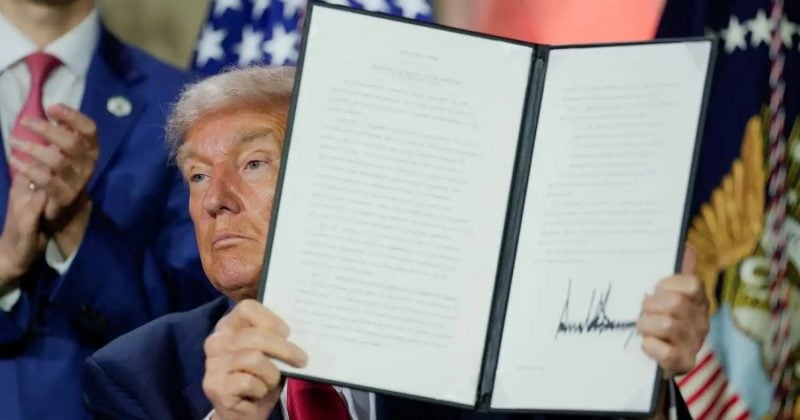
This framework didn’t emerge from nowhere. It sits at the end of a policy sequence that began in January 2025, when the Trump administration revoked prior executive orders on AI. The March 20, 2026 National Policy Framework laid the groundwork for how the administration thinks about AI innovation and security. Then came the June 2, 2026 Executive Order on AI innovation, which instituted a classified benchmarking process for what are termed “covered frontier models” and paved the way for a voluntary pre-release review mechanism.

Why crypto investors should pay attention

The open-source question embedded in this framework is the one to track. If the voluntary review process creates friction around open-source AI releases, that could complicate the roadmap for decentralized AI protocols that depend on openly available models.

Disclosure: This article was edited by Editorial Team. For more information on how we create and review content, see our Editorial Policy.

Trump administration prepares voluntary framework for AI companies to submit models for government review

Trump administration prepares voluntary framework for AI companies to submit models for government review

OpenAI, Anthropic, and Google have already provided joint edits to the draft, but the voluntary nature of the program hinges on how testing rules shake out

Via brookings.edu

The White House is finalizing a voluntary framework that would create a standardized process for AI companies to submit their most advanced models for government review before releasing them to the public.

A draft of the framework was circulated by the White House’s Office of the National Cyber Director around July 13-14, 2026, to major AI players including OpenAI, Anthropic, and Google. All three companies provided joint edits to the document.

Advertisement

What the framework actually does

The core idea is straightforward: replace the current ad-hoc national security reviews of advanced AI models with something more predictable and structured. The new framework would standardize how companies communicate with the government about their most capable systems before those systems hit the market.

The framework is explicitly voluntary. No mandatory licensing. No preclearance requirements. No permitting regime.

Companies have been cautious about fully committing until the testing rules are clearly defined. How the government defines testing, what counts as a frontier model, and how open-source releases are treated under the framework will determine whether this becomes a meaningful touchpoint between industry and government.

The policy timeline that got us here

This framework didn’t emerge from nowhere. It sits at the end of a policy sequence that began in January 2025, when the Trump administration revoked prior executive orders on AI. The March 20, 2026 National Policy Framework laid the groundwork for how the administration thinks about AI innovation and security. Then came the June 2, 2026 Executive Order on AI innovation, which instituted a classified benchmarking process for what are termed “covered frontier models” and paved the way for a voluntary pre-release review mechanism.

Why crypto investors should pay attention

The open-source question embedded in this framework is the one to track. If the voluntary review process creates friction around open-source AI releases, that could complicate the roadmap for decentralized AI protocols that depend on openly available models.

Disclosure: This article was edited by Editorial Team. For more information on how we create and review content, see our Editorial Policy.