
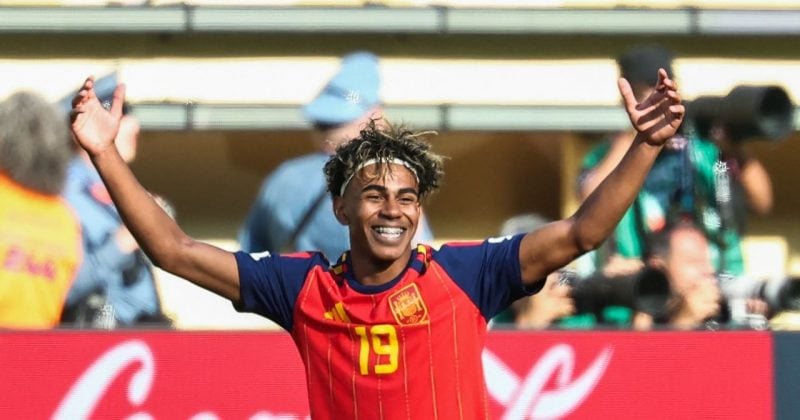
Spain wins 2026 World Cup, and crypto’s presence at the tournament tells its own story
Kraken served as the official crypto exchange supporter while Chiliz fan tokens surged on match results, but blockchain's footprint at the biggest sporting event on earth remained modest.
Spain beat Argentina 1-0 on July 20 to claim the 2026 FIFA World Cup trophy, capping off a 104-game tournament that produced 308 goals across 48 participating nations. The Athletic published its definitive team rankings after the final whistle, placing Spain at the top and Argentina second.
The tournament by the numbers
This was the first World Cup played under the expanded 48-team format. The 308 total goals across 104 matches averaged out to just under three per game. Norway emerged as one of the surprise packages, reaching the quarterfinals and earning praise in The Athletic’s rankings for punching above their weight class on the world stage.
Kraken plants a flag, but crypto’s bench is thin
On June 9, 2026, Kraken was announced as the Official Crypto Exchange Supporter of the 2026 World Cup, covering North America and Europe. Kraken was essentially the only major crypto entity with a visible presence at the tournament, compared to the dozens of traditional sponsors from sportswear giants to beverage companies to automakers that blanketed every stadium, broadcast, and billboard.
Fan tokens had their moment
Fan tokens tied to national teams, including $ARG and $SPAIN, experienced notable trading surges that tracked closely with on-field performance. When a team won a knockout match, its token spiked. When a team got eliminated, traders moved on. For Chiliz, which has built its entire business around the intersection of sports fandom and blockchain, the tournament was a month-long proof of concept.
The news moving money, markets, and the world—before your day starts.
Daily. Free. Join 34,000+ readers across crypto, finance, and policy.
What this means for investors
Kraken’s sponsorship deal validates that top-tier exchanges see value in sports marketing at the highest level. For Kraken specifically, the partnership likely served as a customer acquisition play in North America and Europe, two regions where exchange competition is fierce and brand differentiation matters. For Chiliz and the broader fan token ecosystem, the World Cup data reinforces both the opportunity and the limitation: trading surges around major tournaments are reliable enough to build a business model around, but the seasonal nature of that demand caps the upside. The broader signal is that crypto hasn’t yet cracked the code on sports sponsorship at scale, with one major exchange partnership and fan token trading activity across a month-long tournament representing a start, not a breakthrough.