
Jay Clayton calls super intelligence a national security issue
The director of national intelligence compared the race for super intelligence to the nuclear arms race, urging US companies to keep building without a pause.
Jay Clayton, the US Director of National Intelligence, went on CNBC on September 30 and made a statement that would have sounded like science fiction a few years ago: super intelligence is a national security issue, and the United States cannot afford to hit the brakes on developing it.
Clayton, who was confirmed as DNI by a 51-47 Senate vote on July 28 and sworn in on August 3, drew a direct comparison between the current race for super intelligence and the nuclear arms race. The implication was clear. Whoever gets there first sets the rules for everyone else.
The White House summit that set the stage
Clayton’s remarks came one day after a White House summit on September 29 that brought together some of the most powerful people in technology. President Trump hosted Sundar Pichai of Google, Mark Zuckerberg of Meta, and Elon Musk of xAI for discussions on frontier AI development.
The summit produced a voluntary agreement called the “Joint Commitment on Frontier Responsibilities,” signed by the attending tech CEOs.
The agreement focuses on implementing four layers of internal and external controls for managing frontier models.
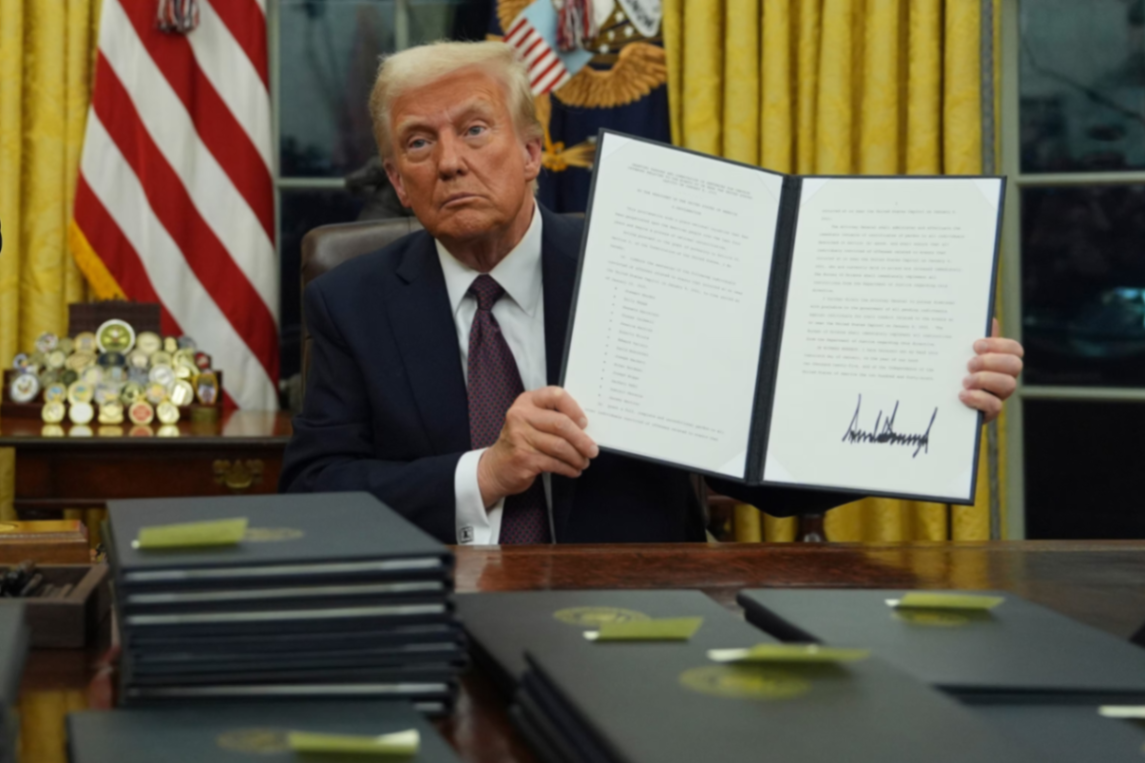
Trump also used the summit to issue an executive order that officially replaces the term “artificial intelligence” with “super intelligence” across all government communications.
AI, tech, and the markets they move—in one daily briefing.
Daily. Free. Join 34,000+ readers across crypto, finance, and policy.
Clayton’s background and strategic posture
Clayton is not a technologist by training. He previously served as SEC chairman and as US Attorney for the Southern District of New York, two positions that made him one of the most influential figures in American financial regulation.
His core argument on CNBC was straightforward: the US should support its companies in developing super intelligence and should not impose a pause on research.
Clayton’s position reflects a broader administration strategy that prioritizes speed and competitive advantage over caution, with the logic that if the US pauses, adversaries won’t.
What this means for the tech landscape
The voluntary commitment signed at the White House summit is notable for what it is and what it isn’t. It’s a signal that the largest AI companies are willing to accept some guardrails. It’s not, however, binding regulation with enforcement mechanisms and penalties.
For companies like Google, Meta, and xAI, the arrangement allows them to demonstrate responsibility to the public and to lawmakers while retaining control over how safety measures are implemented.
For investors, Clayton’s framing of super intelligence as a national security priority could translate into tangible government support for the sector. When the intelligence community labels something a matter of national security, funding and institutional backing tend to follow.