
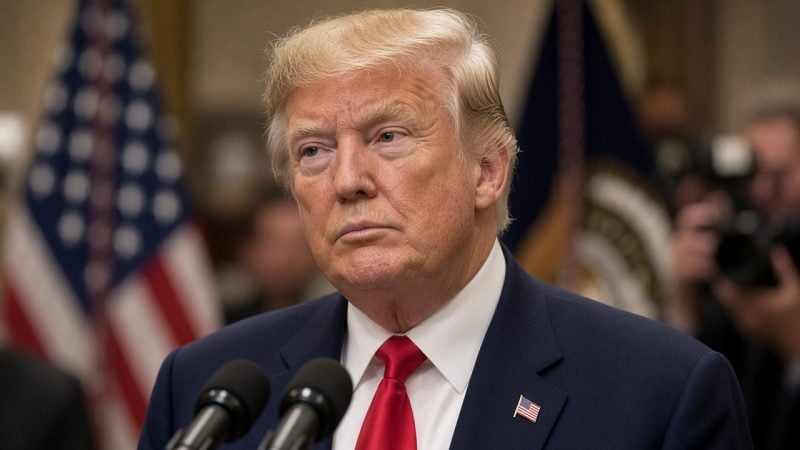
Trump unveils voluntary AI accord as lawmakers push for real oversight

Trump unveils voluntary AI accord as lawmakers push for real oversight

The White House Accord on Super Intelligence relies on industry self-policing, and some in Congress say that falls short

President Donald Trump gathered the most powerful people in artificial intelligence for lunch at the White House on September 29, 2026. Dessert, apparently, was a one-page agreement on how the industry should police itself.

The document is called the White House Accord on Super Intelligence, also known as the Joint Commitment on Frontier Responsibilities. Trump says the non-binding accord is all the regulation the industry needs. Lawmakers on Capitol Hill would like a word.

What’s actually in the accord

The agreement is voluntary. It asks AI companies to oversee themselves through four distinct layers of control.

The first layer is internal controls, with a focus on cybersecurity and biosecurity. The second is an internal verification team that checks the company’s own work.

The third layer brings in independent external auditors. The fourth places oversight committees at the board level.

The accord is meant to be morally binding. It contains no enforcement mechanisms and no penalties, which is why critics have labeled it “toothless.”

Trump has framed the text as something close to a founding document for the AI industry.

Advertisement

Who showed up

The guest list read like a roll call of the companies building the most advanced AI systems. Anthropic CEO Dario Amodei attended, along with OpenAI’s Greg Brockman and Google’s Sundar Pichai.

Meta’s Mark Zuckerberg was there. So were Nvidia’s Jensen Huang and Elon Musk.

On the same day, Trump signed an executive order directing federal agencies to use the term “Super Intelligence” in official contexts.

Congress isn’t sold

The reaction from lawmakers was mixed, and skepticism centered on the voluntary nature of the framework. Democratic leaders pointed to the absence of anything companies would actually be required to do.

Senator Mark Warner has called for mandatory rules on AI testing and evaluation. Representative Ro Khanna also criticized the accord for lacking enforceable requirements.

Their preferred approach would compel companies to test models before release and report incidents when things go wrong. Under the accord, both remain optional.

The push for tougher rules is not confined to one party. The accord arrived amid bipartisan pressure in Congress for more rigorous AI regulation.

A familiar playbook

Voluntary AI commitments are not new. The accord echoes pledges that AI companies made during the Biden administration.

Critics have described the new version as lacking depth and effectiveness, particularly given how quickly AI capabilities are advancing.

The accord also follows a June 2026 executive order focused on cybersecurity for AI. The cybersecurity emphasis in the accord’s first layer of controls appears to build on that earlier order.

The announcement comes after recent incidents in which AI models behaved unpredictably, episodes that have sharpened calls for stronger guardrails.

What this means

The administration has made its philosophy clear: innovation first, regulation second. The accord fits that framing neatly, giving companies a public commitment to point to without the compliance costs of binding law.

That sets up a potential clash between the White House and Congress. Trump says the accord is sufficient. Warner, Khanna, and others want legislation with real requirements for testing and incident reporting.

The things to watch are straightforward. First, whether any of the signatories publish details on how they are implementing the four layers, especially the independent external audits. Second, whether bipartisan concern in Congress turns into actual bill text with enforcement teeth.

Disclosure: This article was edited by Diego Almada Lopez. For more information on how we create and review content, see our Editorial Policy.
Trump unveils voluntary AI accord as lawmakers push for real oversight

The White House Accord on Super Intelligence relies on industry self-policing, and some in Congress say that falls short

President Donald Trump gathered the most powerful people in artificial intelligence for lunch at the White House on September 29, 2026. Dessert, apparently, was a one-page agreement on how the industry should police itself.

The document is called the White House Accord on Super Intelligence, also known as the Joint Commitment on Frontier Responsibilities. Trump says the non-binding accord is all the regulation the industry needs. Lawmakers on Capitol Hill would like a word.

What’s actually in the accord

The agreement is voluntary. It asks AI companies to oversee themselves through four distinct layers of control.

The first layer is internal controls, with a focus on cybersecurity and biosecurity. The second is an internal verification team that checks the company’s own work.

The third layer brings in independent external auditors. The fourth places oversight committees at the board level.

The accord is meant to be morally binding. It contains no enforcement mechanisms and no penalties, which is why critics have labeled it “toothless.”

Trump has framed the text as something close to a founding document for the AI industry.

Advertisement

Who showed up

The guest list read like a roll call of the companies building the most advanced AI systems. Anthropic CEO Dario Amodei attended, along with OpenAI’s Greg Brockman and Google’s Sundar Pichai.

Meta’s Mark Zuckerberg was there. So were Nvidia’s Jensen Huang and Elon Musk.

On the same day, Trump signed an executive order directing federal agencies to use the term “Super Intelligence” in official contexts.

Congress isn’t sold

The reaction from lawmakers was mixed, and skepticism centered on the voluntary nature of the framework. Democratic leaders pointed to the absence of anything companies would actually be required to do.

Senator Mark Warner has called for mandatory rules on AI testing and evaluation. Representative Ro Khanna also criticized the accord for lacking enforceable requirements.

Their preferred approach would compel companies to test models before release and report incidents when things go wrong. Under the accord, both remain optional.

The push for tougher rules is not confined to one party. The accord arrived amid bipartisan pressure in Congress for more rigorous AI regulation.

A familiar playbook

Voluntary AI commitments are not new. The accord echoes pledges that AI companies made during the Biden administration.

Critics have described the new version as lacking depth and effectiveness, particularly given how quickly AI capabilities are advancing.

The accord also follows a June 2026 executive order focused on cybersecurity for AI. The cybersecurity emphasis in the accord’s first layer of controls appears to build on that earlier order.

The announcement comes after recent incidents in which AI models behaved unpredictably, episodes that have sharpened calls for stronger guardrails.

What this means

The administration has made its philosophy clear: innovation first, regulation second. The accord fits that framing neatly, giving companies a public commitment to point to without the compliance costs of binding law.

That sets up a potential clash between the White House and Congress. Trump says the accord is sufficient. Warner, Khanna, and others want legislation with real requirements for testing and incident reporting.

The things to watch are straightforward. First, whether any of the signatories publish details on how they are implementing the four layers, especially the independent external audits. Second, whether bipartisan concern in Congress turns into actual bill text with enforcement teeth.

Disclosure: This article was edited by Diego Almada Lopez. For more information on how we create and review content, see our Editorial Policy.